


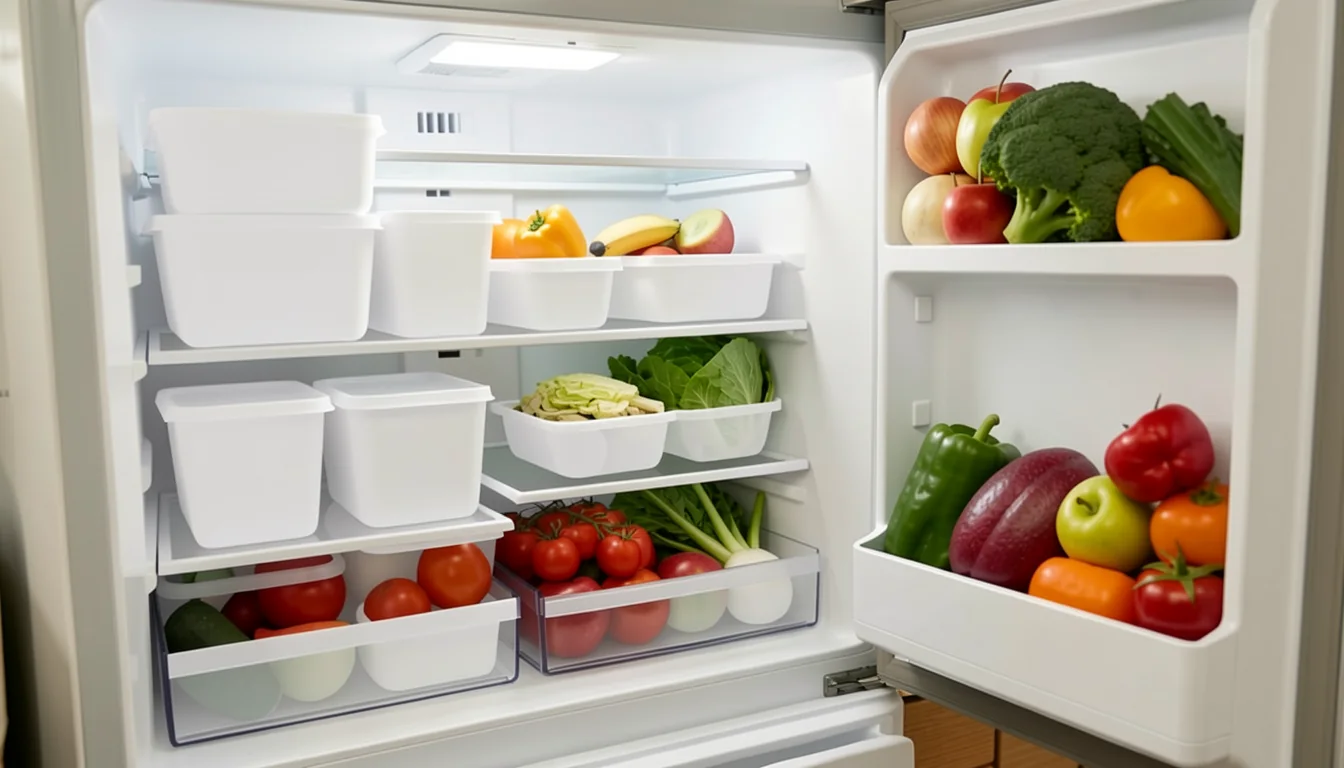
Effective refrigerator organization makes safe food easier to see and use. It does not require a showroom grid of matching containers. A useful system keeps the appliance cold, preserves airflow, separates foods that could leak, and gives leftovers and short-lived ingredients a visible place. When everyone can tell what is available and where it belongs, fewer items disappear behind tall bottles or turn into unidentifiable containers.
The best arrangement depends on the refrigerator model, household habits, accessibility needs, and the foods you actually bring home. Begin with the appliance manual and a temperature check, then organize around real meal decisions. Storage bins are optional tools, not the system itself. A clear shelf with sensible spacing and consistent placement is often more effective than a crowded collection of organizers.
Define what the refrigerator must do
A refrigerator has several jobs at once: hold a safe temperature, allow cold air to circulate, contain drips, protect delicate produce, keep ready-to-eat food accessible, and show people what needs attention. Problems start when an arrangement optimizes only one job. Packing every item into a bin may look orderly but hide airflow or make the bin too heavy. Leaving everything loose may improve flexibility but allow small items to vanish.
List the five or six food groups that repeatedly enter your refrigerator. A household might name prepared leftovers, lunch ingredients, dairy, vegetables, fruit, condiments, and raw ingredients. Another may need space for infant feeding supplies, medication, meal deliveries, or mobility-friendly containers. Do not copy someone else’s zones until you know which categories your refrigerator must support.
Use the map to connect cold storage with the rest of the kitchen. Dry ingredients and unopened shelf-stable items belong in a pantry arranged around actual cooking. If that area is also difficult to scan, this guide to organizing a pantry around regular meals can help the two storage systems work together rather than sending duplicate items into both places.
Verify temperature before rearranging shelves
An attractive layout cannot compensate for unsafe temperature. The U.S. Food and Drug Administration advises keeping the refrigerator at or below 40°F and the freezer at 0°F. Its guidance on storing food safely also recommends using an appliance thermometer rather than relying only on the built-in setting. Place and read the thermometer according to its instructions, and investigate temperatures outside the safe range.
Check the door seal for visible debris or damage, confirm that packages are not preventing closure, and leave room for air to move around vents. Do not line shelves in a way the appliance manual prohibits. If temperature remains too warm, food has been in an unsafe condition, the door will not seal, or the refrigerator behaves unusually, follow the manufacturer’s troubleshooting guidance and seek qualified service. Do not decide that questionable perishable food is safe based only on smell or appearance.
Know what should not live in the door. Door shelves experience more temperature change as they open. Use the refrigerator manual and food packaging guidance when choosing locations, and reserve more temperature-sensitive perishables for an appropriate interior shelf. A door can still work well for many condiments and stable beverages, but avoid treating every molded compartment as proof that a specific food belongs there.
Build zones from risk, visibility, and reach
Start with containment. Place raw meat, poultry, or seafood in a secure container or on a tray that can catch leaks, positioned so drips cannot fall onto ready-to-eat food. Keep prepared food covered. The exact shelf may depend on the model’s temperature pattern and household accessibility, but leak prevention is nonnegotiable. Clean any spill promptly using methods suitable for the refrigerator’s materials.
Give leftovers and opened ingredients a high-visibility area. Eye level is useful for many adults, but the right height is the one that household decision-makers can see and reach safely. Keep this area shallow enough that one container does not hide three others. If the refrigerator is shared, use an agreed section rather than scattering personal containers through every shelf.
Organize frequently used breakfast or lunch components together only when the grouping does not compromise safe storage. A handled bin can bring yogurt cups or sandwich ingredients forward, but it should not block a vent or become too heavy to lift. Children may benefit from a reachable snack area containing foods their caregivers have approved. Medications and specialized foods should follow their own storage instructions and be secured from unauthorized access.
Produce drawers help manage humidity and protect delicate items, but controls and recommended settings differ. Read the refrigerator manual. Keep ethylene-sensitive produce separate from high ethylene producers when that distinction matters for the foods you buy, and avoid washing produce far in advance unless you can dry and store it appropriately. Excess surface moisture can accelerate deterioration in some foods.
Choose containers for the task, not the photograph
A container earns space when it solves a recurring problem. Use a shallow tray to contain packages that might leak, a small bin to keep loose yogurt cups from migrating, or a clear container to make a prepared meal visible. Avoid buying a full set before testing dimensions. Measure shelf depth, height, door clearance, and the space needed to remove a bin without tilting neighboring food.
Choose food-contact containers intended for the contents and temperature. Follow the manufacturer’s instructions for dishwasher, microwave, freezer, and lid use. Replace cracked, heavily scratched, warped, or poorly sealing pieces as appropriate. A clear side can improve visibility, but an opaque container may be correct for a food with specific light-storage instructions.
Do not decant solely for visual uniformity. Original packaging can carry preparation directions, allergen details, lot information, use instructions, and dates. Keep that information with the food when it matters. If you transfer an item, identify it clearly using a method everyone in the household can understand; avoid relying on memory or container shape.
Create an arrival route for groceries
Organization works better when incoming food has a predictable route. Before shopping or delivery, scan the refrigerator and identify what needs to be used soon. At unpacking, put cold perishables away promptly. Move older compatible items forward without combining foods when that would erase dates, allergen information, or preparation history. Place the new package behind the current one only if everyone can still see and remove it.
Use a small “use soon” area for items that are safe but approaching the point when the household plans to use them. This is a decision cue, not a quarantine for questionable food. A half bell pepper, opened sauce, ripe fruit, or planned leftover lunch may belong there. Food with unknown history, spoilage signs, damaged packaging, or unsafe temperature exposure should be evaluated using authoritative guidance, not placed in the bin to postpone the decision.
Keep the use-soon area limited. If it becomes an overflowing shelf, it stops directing attention. During meal planning, choose one or two items from it and build the next meal or snack around them. During unpacking, remove anything no longer safe or useful and clean the container if there was leakage. This short loop connects storage to consumption instead of treating refrigerator cleaning as a separate household project.
Make leftovers easy to identify and choose
A leftover needs three pieces of information: what it is, when it entered refrigerated storage, and whether anyone has a plan for it. Use removable labels, a grease pencil on compatible glass, a household note, or another clear method that does not damage containers. The tracking method should be readable to the people making meal decisions and should not cover vents or critical packaging information.
Date tracking does not create one universal disposal rule. Different foods and handling histories have different limits, and a refrigerator does not reverse unsafe time or contamination. Use current government food-safety guidance, package instructions, and household-specific medical advice when relevant. When you cannot establish a perishable food’s history, do not taste it as a test.
Group one meal’s components together when that makes them easier to use: cooked grain, roasted vegetables, and a covered sauce may form one dinner set. Keep foods separate when their safe handling, allergens, or intended users differ. In a household with food allergies, use the separation and cleaning practices recommended by the person’s healthcare team and relevant product information; casual color coding alone may not prevent cross-contact.
Build leftovers into the next visible choice. Put them at eye level before unopened alternatives, add them to the household meal note, or designate one flexible meal period when people select from what is available. The purpose is not to force anyone to eat questionable food. It is to make safe, identified food compete fairly for attention.
Use the whole space without creating blind spots
Deep shelves invite front-to-back loss. Store shorter containers in front of taller ones, or use one shallow pull-forward bin for small matching items. A rotating tray can help with compatible jars if it turns freely and does not crowd the shelf, but it is a poor choice for unstable containers or items that should not be stored together. Test each organizer under real load before committing to it.
Leave a visible gap near vents and lights as the manual requires. Avoid stacking packages so tightly that cold air cannot circulate or labels cannot be seen. Keep tall containers away from hinges and controls. Make sure drawers can open without hitting door shelves. Close the door after each adjustment and verify that nothing shifts into the seal.
Accessibility may change the ideal arrangement. Put the most-used and safest-to-handle items within comfortable reach. Avoid heavy glass containers above shoulder level or large pull-out bins that require twisting. If a household member uses a mobility aid or has limited grip, lighter containers, front-facing handles, and stable shelf placement can matter more than conventional category zones.
Run a short maintenance loop
| Trigger | Quick action | What the action prevents |
|---|---|---|
| Before groceries arrive | Scan leftovers and produce, clear one landing area, and check the use-soon section. | New food burying older food and perishables sitting out during rearrangement. |
| After a meal | Store leftovers safely, identify them, and assign a visible place or next use. | Unknown containers and oversized serving dishes occupying useful space. |
| When a spill appears | Contain it promptly, move affected food safely, and clean by the appliance manual. | Sticky residue, odor, cross-contamination, and damage from unsuitable cleaners. |
| When a zone overflows | Remove the bin, group like items, and question duplicates or abandoned ingredients. | A container becoming a new hidden junk drawer. |
| Before closing the door | Check vents, package stability, drawer movement, and the door seal. | Blocked airflow, crushed food, and a door left slightly open. |
These triggers attach maintenance to actions already happening in the kitchen. They are more durable than a rigid cleanout day because a spill can be handled when it occurs and a crowded shelf can be corrected when groceries arrive. For a deeper interior clean, move food safely, follow the appliance manual, and avoid harsh tools or products that could damage liners, gaskets, controls, or glass.
High-touch handles and controls may need their own surface-safe method. Refrigerator finishes, touchscreens, coated handles, and seals can respond differently to moisture and cleaners. The principles in this guide to cleaning high-touch areas without damage can help you choose a method based on the material and manufacturer instructions rather than using one product everywhere.
Common refrigerator organization mistakes
- Organizing before checking temperature. Safe cooling and a properly closing door come before visual order.
- Overfilling every shelf. Dense packing can block airflow, hide food, and make it harder to close the door.
- Putting vulnerable food below possible leaks. Raw ingredients need secure containment away from ready-to-eat food.
- Decanting without preserving information. Removing packaging can lose allergens, instructions, dates, and identification.
- Treating the door as equally cold everywhere. Placement should reflect temperature stability, the manual, and food guidance.
- Creating a huge use-soon zone. A cue only works when it contains a small, realistic set of next choices.
- Using smell as a safety test. Harmful contamination may not produce a clear odor, and tasting is not a safe test.
- Buying organizers before measuring. Poorly sized bins waste space, block vents, or keep drawers and doors from moving.
Frequently asked questions
Where should leftovers go?
Put covered, identified leftovers in a visible interior location that maintains safe temperature and does not risk contamination from raw foods. Eye level works for many households, but accessible reach and the refrigerator’s airflow pattern also matter. Keep the area shallow enough that people can see what is available.
Do I need matching clear containers?
No. Matching containers can stack efficiently, and clear sides can improve visibility, but food-safe construction, secure closure, practical size, and ease of cleaning matter more. Keep original packaging when it carries information the household needs.
Should vegetables be washed before refrigeration?
Follow current guidance for the specific produce. In many cases, waiting to wash until use helps avoid storing excess moisture, but household practices and the item differ. If you wash produce early, dry and store it appropriately, keep it separate from raw animal products, and follow authoritative food-safety instructions.
How can several roommates share one refrigerator?
Agree on a few shared zones and give each person a clearly defined area that does not compromise safe storage. Establish a method for identifying leftovers and handling spills, abandoned food, and shared ingredients. Avoid moving or discarding another person’s food without the agreed process unless there is an immediate safety issue.
What if my refrigerator is still crowded after organizing?
Look for oversized containers, duplicate open packages, shelf-stable items stored cold unnecessarily, and ingredients no one plans to use. Confirm storage instructions before moving anything out. If the volume routinely exceeds safe usable capacity, adjust purchase quantities or meal sequencing rather than compressing food against vents.
Final takeaway
Refrigerator organization should shorten the distance between seeing food and using it safely. Verify temperature, protect airflow, contain raw-food leaks, place leftovers where they are visible, and use a small area to cue the next meal. Choose containers only after a recurring problem is clear, and preserve the information people need to identify and handle each item.
Begin with one shelf, not the entire appliance. Check the temperature, remove questionable or unusable items according to safe guidance, wipe the shelf with a manual-approved method, and return food in risk-aware zones. Then test the arrangement through one normal grocery cycle. If people can find leftovers, the door closes easily, vents stay clear, and short-lived ingredients move into meals, the system is doing its job.