

To clean high-touch areas without damaging them, start by identifying the surface rather than reaching automatically for the strongest product. A door lever, painted cabinet pull, phone screen, sealed stone counter, and upholstered armrest may all be touched frequently, but they cannot necessarily tolerate the same chemistry, moisture, pressure, or tool. Cleaning succeeds when the method removes ordinary soil while respecting the manufacturer’s care instructions.
Frequency should follow actual household use and circumstances, not a universal timetable. An entry handle used by several people may need attention sooner than a guest-room switch. Visible soil, food residue, illness in the home, product instructions, and public health guidance can also change the response. Build a short route around the items your household truly touches instead of treating every vertical surface as equally urgent.
Know whether the task is cleaning or disinfecting
Cleaning removes dirt and many germs from a surface with a suitable cleaner and physical action. Disinfecting uses a registered product to kill listed microorganisms when the label conditions are met. The steps are related but not interchangeable. A visibly dirty surface may prevent a disinfectant from working as intended, while routine home conditions may not require disinfecting every object after every touch.
The Centers for Disease Control and Prevention explains in its guidance on cleaning and disinfecting a home that regular cleaning is often sufficient and that disinfection may be appropriate in particular circumstances, including when someone is sick. Follow current health guidance relevant to the situation as well as the product label. Do not turn a targeted health measure into constant chemical use without a reason.
When disinfection is appropriate, choose a product whose label covers both the intended use and the surface. A product can be effective against a listed organism yet unsuitable for a particular finish. The label determines where and how it may be used; a social-media tip or homemade mixture does not override it.
Create a material map for common touchpoints
| Touchpoint | Material question | Lower-risk starting method | Watch for |
|---|---|---|---|
| Door and cabinet hardware | Is it coated, plated, painted, solid metal, or paired with a smart lock? | Soft cloth with a compatible mild cleaner | Liquid entering lock openings or removing a finish |
| Light switches and controls | Is it a standard plate, painted control, dimmer, or electronic panel? | Power-aware cleaning with a barely damp cloth as instructions allow | Moisture at seams, vents, or electrical components |
| Phones and keyboards | What coating and ingress protection does the manufacturer specify? | Device-maker’s approved cloth and cleaner method | Spray, excess pressure, ports, and damaged cables |
| Counter edges and appliance pulls | Is the surface sealed stone, laminate, wood, paint, or specialty coating? | Compatible cleaner on a soft cloth, followed by directed drying | Etching, swelling, streaks, or cleaner entering controls |
| Upholstered arms and remotes | What fiber, dye, fill, or electronic construction is present? | Care-code or manufacturer-approved method | Water rings, dye transfer, saturation, and liquid in buttons |
Read the surface before you clean it
Look for a care label, model number, owner’s manual, or manufacturer support page. Identify whether a wood surface is painted, oiled, waxed, or film-finished; whether metal is plated or coated; whether stone is sealed; and whether a screen has an anti-glare or fingerprint-resistant coating. If you cannot identify a finish, assume it may be sensitive and test a mild approach in a hidden spot.
A successful patch test checks more than color. Let the test area dry fully, then compare gloss, texture, tackiness, and any residue under normal light. Confirm that buttons, locks, sliders, and touch controls still operate normally. If the cloth picks up finish color or the surface becomes cloudy, stop and seek a compatible method.
Assemble a small, controlled kit
More products do not create a better system. Multipurpose cleaner may work on several finishes, but “multipurpose” never means every material. Keep products in original labeled containers. Do not pour them into drink bottles, combine them, or use an unlabeled leftover mixture. Store them as directed and away from children, pets, food, and incompatible conditions.
Before beginning, clear objects that could be damaged by drips and create ventilation as the product label requires. Wash hands as appropriate, and use any gloves, eye protection, or other protective equipment specified on the label. If instructions are unavailable or conflict with the object’s care guidance, pause rather than guessing.
Use a repeatable cleaning sequence
1. Remove loose particles
Dust and grit can scratch glossy plastic, metal, screens, and painted finishes when rubbed. Use a clean dry cloth or the manufacturer-approved dust-removal method first. Pay attention to the underside of pulls and the edges of switch plates, where residue accumulates but aggressive scrubbing can damage seams.
2. Control the liquid
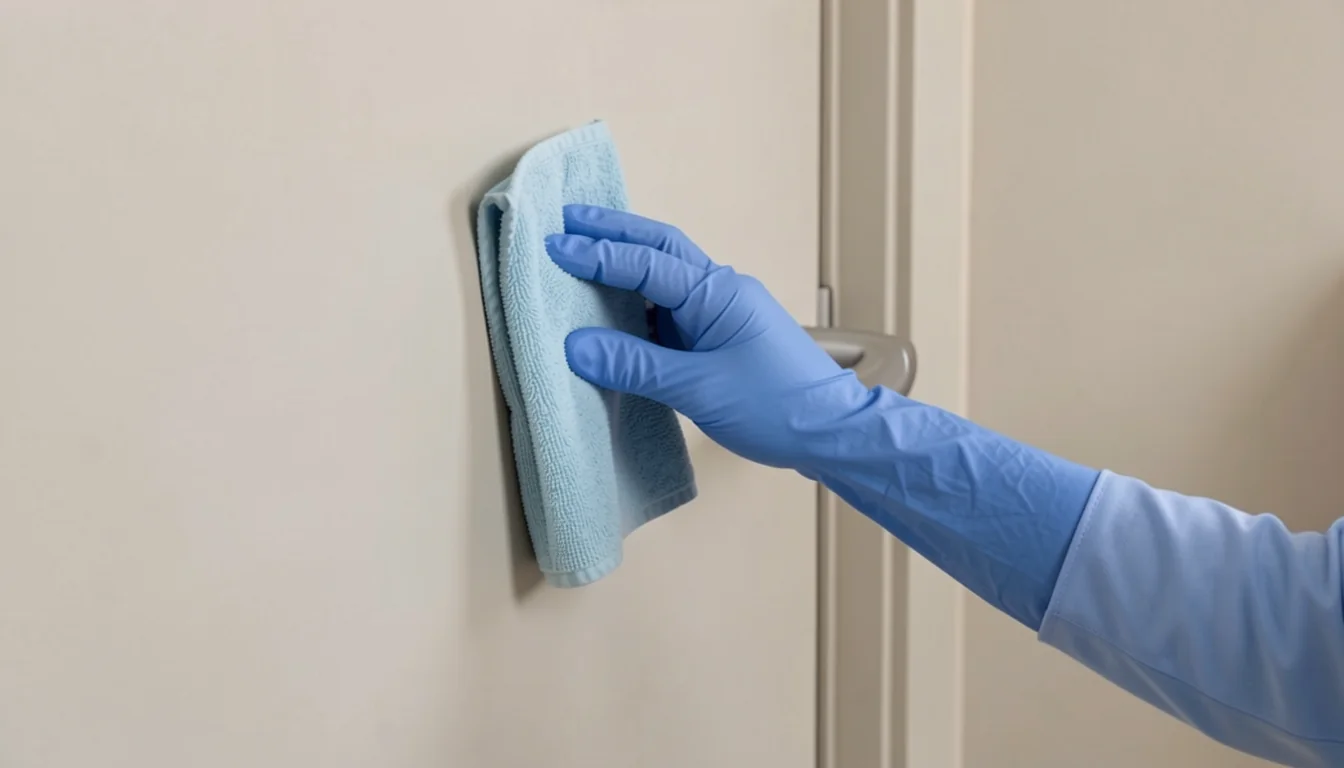
Unless instructions say otherwise, apply a small amount of compatible product to the cloth instead of spraying the object. The cloth should not release liquid when pressed. This gives better control around keyholes, buttons, screen edges, electrical plates, and joints. It also reduces overspray onto nearby paint, fabric, or flooring.
3. Wipe with light, complete passes
Fold the cloth into clean faces and work across the touch area, not only the visibly dirty center. Use gentle pressure and allow the compatible cleaner to do its work. Repeated hard rubbing can polish a matte finish, lift paint, distort soft plastic, or drive debris into a seam.
4. Rinse or dry only as directed
Some products require a rinse on food-contact surfaces; others should remain wet for a label-specified period when used for disinfection. Some material makers direct immediate drying. Follow the applicable instructions rather than applying one finishing step everywhere. Use a separate clean cloth when a rinse or dry pass is required.
Door handles, pulls, and railings
Hardware is often a layered object: a decorative finish over metal, attached to painted wood, surrounding a lock or electronic component. Clean the handle and its neck while protecting adjacent materials. Work product onto a cloth, wipe fingerprints and soil, then complete any directed rinse or dry step. Do not flood the rose plate, keyway, latch edge, or smart-lock seam.
Harsh abrasive pads and powders may leave permanent directional scratches or remove protective coatings. Acidic or alkaline products can also alter certain metals and stones. Choose according to the hardware maker and cleaner label, not the appearance of the underlying metal. If hardware is loose, tighten it only according to the product instructions or request maintenance; cleaning pressure is not a repair.
Light switches, thermostats, and wall controls
Electrical controls require moisture restraint. Follow the device manufacturer’s cleaning directions and turn off equipment or power when those directions require it. Never spray a switch, outlet, thermostat, dimmer, control panel, or wall plate directly. A barely damp cloth may be appropriate for some exterior surfaces, but it must not push liquid into gaps.
Clean the control face and plate without forcing knobs or lifting keypad edges. Avoid coating a thermostat sensor or blocking its vents. If a switch is cracked, hot, sparking, discolored, loose, or behaving unusually, stop using it and contact the responsible property party or a qualified electrician. Cleaning is not a remedy for an electrical fault.
Phones, tablets, keyboards, and remotes
Power down and unplug electronics when the manufacturer directs. Remove cases only if you can reinstall them correctly, then clean the case and device as separate materials. Device coatings and adhesive seals vary, so follow the current instructions for the exact model. A liquid that is acceptable on one phone may harm another screen, speaker mesh, keyboard coating, or remote.
Never assume a water-resistance rating makes spraying or soaking safe. Keep moisture away from ports and openings, avoid compressed-air methods unless approved, and do not scrape residue with metal tools. Replace or professionally assess swollen batteries, damaged charging cables, cracked housings, or devices that become hot; do not clean through a condition that may be hazardous.
Kitchen touchpoints and food-contact boundaries
Refrigerator pulls, faucet handles, cabinet knobs, appliance controls, and the front edge of a counter collect distinct soils. Start by removing grease with a cleaner compatible with each finish. Keep liquid out of appliance control seams and display edges. Do not use an abrasive tool on stainless-looking material until you confirm what the surface actually is and what direction or method its maker recommends.
Pay attention to the boundary between a touchpoint and a food-contact surface. A disinfectant label may require rinsing after use in food areas, or it may not permit that application. Follow the label precisely, move uncovered food and utensils away, and prevent cloths used on handles from spreading soil across a preparation surface.
An organized refrigerator is easier to wipe because products do not block handles, ledges, and spill zones. Our guide to refrigerator organization explains how to create practical zones without losing sight of cleaning access.
Painted, wood, stone, and laminate surfaces
Paint sheen affects cleanability, but age, quality, and condition matter too. Flat paint may burnish under rubbing, while damaged glossy paint can still lift. Start with a dry or lightly damp soft cloth if the paint maker permits, test behind furniture or near an inconspicuous edge, and avoid saturating drywall or trim joints.
Wood care depends on the finish, not just the species. Water can enter worn edges, joints, and veneer, causing swelling or cloudiness. Use the furniture or coating maker’s method and wipe in a controlled way. Do not treat an unknown household oil as a substitute for a defined finish-care product.
Natural and engineered stone, solid-surface material, and laminate respond differently to acids, alkalinity, solvents, heat, and abrasion. Identify the counter or sill material and sealer when possible. A popular pantry ingredient can still etch stone or affect a coating. “Natural” does not mean universally compatible.
Soft touchpoints: upholstery, curtains, and cushions
Chair arms, sofa edges, curtain pulls, and cushion covers can be high-touch areas, but saturation may spread a stain, create water rings, transfer dye, or wet the filling. Find the upholstery cleaning code and manufacturer instructions. Vacuum with a suitable attachment to remove dry soil, then spot-test the approved method.
Blot rather than aggressively scrub unless the care instructions say otherwise. Work from the outside of a spot inward and keep the affected area controlled. Removable does not automatically mean machine washable; check the cover label and cushion construction. Seek professional care for delicate fabric, uncertain dye stability, large contamination, persistent odor, or moisture that reached deep filling.
Disinfect without improvising
When disinfection is warranted, the U.S. Environmental Protection Agency’s six steps for safe and effective disinfectant use emphasize checking that the product is approved for the intended purpose, reading directions, pre-cleaning when required, observing the stated contact time, using protective measures, and storing it safely. The exact wet time and application method come from the individual label; there is no responsible universal shortcut.
Do not mix disinfectants or add household ingredients. Mixing can create dangerous exposures or make products ineffective. Do not use outdoor, industrial, or skin products on household surfaces unless their labels authorize that exact use. If ventilation or protective requirements cannot be met, choose another approved approach or leave the area and seek guidance.
Keep people and pets away as the label directs. Afterward, complete any required rinse, allow the surface to dry, and store the product in its original container. If exposure occurs, follow the label’s first-aid directions and contact the appropriate emergency or poison-control resource for your location.
Common mistakes that damage high-touch surfaces
Using one spray on every material
Convenience does not establish compatibility. Make a small material map and keep separate approved methods for electronics, finished wood, stone, paint, fabric, and ordinary washable surfaces.
Spraying toward seams and controls
Overspray travels into locks, switches, speakers, display edges, and joints. Put a controlled amount on the cloth when instructions allow, and protect adjacent materials.
Scrubbing harder when residue remains
Residue may require a different compatible cleaner, a directed dwell period, or a rinse—not more force. Stop if the finish changes and identify whether the mark is soil, damage, adhesive, or coating failure.
Skipping the label during disinfection
A quick wipe may not satisfy contact instructions, while leaving an unsuitable product too long may harm the object. Use the labeled surface, application, wet time, ventilation, protection, and rinse directions.
Cleaning over a maintenance problem
Loose hardware, cracked plates, failed seals, peeling finishes, and damaged electronics need repair or replacement. Repeatedly wetting or rubbing the area can make the defect worse and hide useful evidence.
Build a route that fits your household
Walk through one ordinary day and list what hands repeatedly touch: entry hardware, a drop-zone surface, appliance pulls, faucet handles, controls, remotes, and shared devices. Select the items that accumulate visible soil or have a current hygiene reason for attention. Store each item’s approved method in a short note so nobody has to rediscover it.
Reduce future cleaning friction by keeping touchpoints accessible. A functional home drop zone can keep keys and bags from spreading across kitchen counters, while assigned storage keeps cleaners from becoming clutter themselves.
Frequently asked questions
How often should I clean high-touch areas?
Base timing on use, visible soil, household circumstances, product guidance, and current public health advice. A rigid interval cannot account for how many people touch an item, whether someone is ill, or whether the surface is even used that day.
Can I use disinfecting wipes on every handle?
No. The wipe label must allow the intended use, and the handle maker must allow the chemistry and moisture. Coated metal, unfinished wood, electronic locks, and nearby paint may respond differently.
Is vinegar safe for natural stone or screens?
Do not assume so. Acids can damage some stone and coatings, while device makers specify particular screen methods. Follow the manufacturer’s care guidance and test compatible products in an inconspicuous location.
What should I do if a finish becomes cloudy or sticky?
Stop applying product. Do not add another chemical to reverse the first. Preserve the product information, let the area stabilize as instructions allow, and contact the surface or furniture maker or a qualified restoration professional.
Final takeaway
To clean high-touch areas well, match the method to the object. Identify material and condition, remove loose soil, control moisture, and use gentle passes with a compatible product. Disinfect only when appropriate and follow every label condition rather than inventing a shortcut. A small material map and repeatable route protect both household hygiene and the finishes you live with every day.