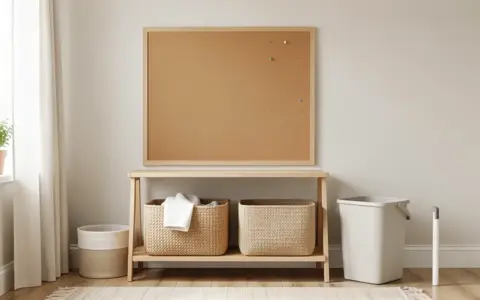


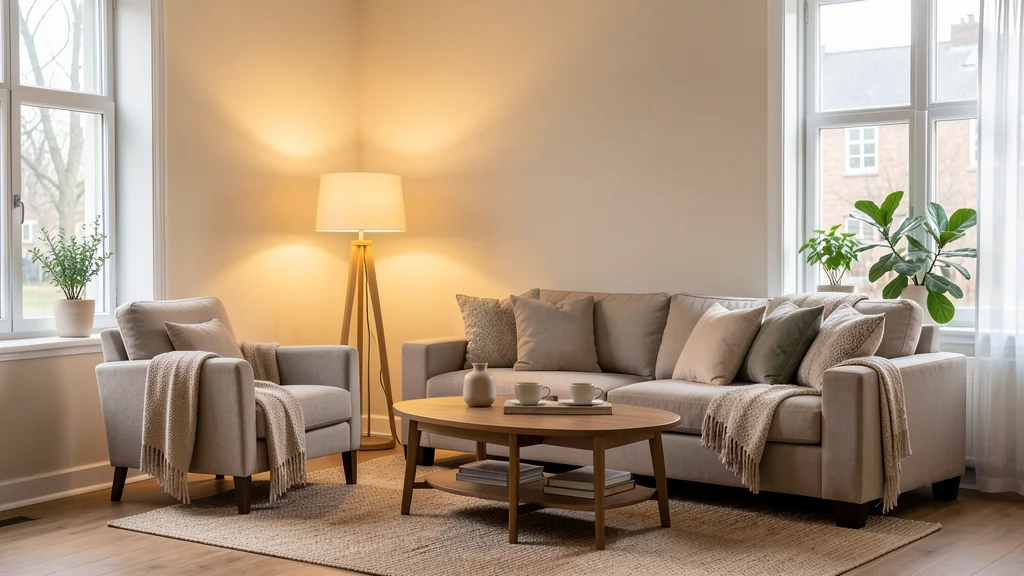
Better lighting at home does not begin with buying brighter bulbs. It begins with noticing what people actually do in each room, where shadows fall, and which fixtures are uncomfortable enough that nobody turns them on. A useful plan combines general visibility with focused light for tasks and softer light for atmosphere. That combination makes rooms easier to navigate, work in, and relax in without forcing one ceiling fixture to do every job.
Walk through your home after dark with the existing lights set as you normally use them. Look for dim corners, reflected glare on screens, work surfaces blocked by your own shadow, and switches that are inconveniently located. Also notice rooms that feel flat or harsh even though they are technically bright. Those observations are more valuable than copying a showroom, because they reveal where your household needs light and how it prefers to use it.
Understand the three jobs light can do
Ambient light supplies broad visibility. It may come from a ceiling fixture, wall sconces, indirect lamps, or daylight. Ambient light helps people enter a room, move around, and see the overall space. It should feel even enough for orientation, but it does not have to illuminate every detailed task.
Task light serves a defined activity such as chopping vegetables, reading, applying makeup, folding laundry, or working at a desk. It works best when it is close to the activity and positioned so the user does not block it. A task lamp can improve function without flooding the entire room with extra light.
Accent light adds depth or draws attention to a surface, object, or architectural feature. A small picture light, a lamp washing light up a textured wall, or a focused light on a plant can create visual hierarchy. Accent light is optional, but it often fixes the “bright yet lifeless” feeling created by uniform overhead illumination.
The layers do not need to be elaborate or expensive. A room may need only an existing ceiling fixture, one movable reading lamp, and a low-output lamp on a shelf. What matters is that the sources have distinct purposes and can be controlled independently. Independent control lets the room adapt instead of remaining locked in one brightness level.
Use this room-by-room planning table
| Space | Primary activities | Useful lighting layers | Common problem to check |
|---|---|---|---|
| Entry and hall | Arriving, finding belongings, walking through | Even ambient light plus a small light at the drop zone | Dark floor transitions or a switch that is hard to reach |
| Living room | Conversation, reading, television, hobbies | Dimmable ambient light, shaded lamps, optional accent light | Bulbs reflected in the television or no light near seats |
| Kitchen | Prep, cooking, cleanup, reading labels | General ceiling light and focused counter or sink light | Your body casting a shadow across the work surface |
| Bedroom | Dressing, reading, winding down | Soft ambient light and individually controlled bedside lights | Only a harsh ceiling source or exposed bulb in the sightline |
| Bathroom | Grooming, bathing, nighttime visits | General light, face-level light, low nighttime option | Deep facial shadows from a single light overhead |
| Workspace | Computer work, writing, video calls | Indirect ambient light and adjustable task light | Window or lamp glare on the monitor |
Entryways, stairs, and hallways: make movement obvious
Circulation areas need clear, predictable illumination more than dramatic effects. Light the floor path, turns, landings, and changes in level. If an entry doubles as the place where keys and mail land, add a small task source near that surface rather than increasing the brightness of the whole hall. The organizational side of that setup is covered in our guide to creating a home drop zone.
Check the route from the exterior door to the first reachable switch. A lamp controlled by a wall switch or an appropriate motion-activated fixture can prevent the awkward moment of entering a dark space with full hands. Avoid placing a portable lamp where its cord crosses the walking path. In a stairway, replace failed lamps promptly and keep fixtures clean enough to distribute light as intended.
Living room: support several activities at once
A living room often fails when all illumination comes from the center of the ceiling. That arrangement may leave seats dim while making the middle of the floor unnecessarily bright. Place a shaded floor or table lamp near the seats used for reading. The bottom of the shade should shield the bulb from a seated person’s normal line of sight. If two people use the room differently, give their areas separate controls.
For television viewing, avoid a bright point source reflected in the screen or aimed toward viewers. Gentle light elsewhere in the room can reduce the stark contrast between the screen and a completely dark background. Move lamps laterally, lower their output, or redirect them toward a wall until reflections disappear from the usual seats. Accent light can then bring depth to a bookshelf or art without competing with the screen.
Before adding fixtures, test positions with lamps you already own. An extension cord may help with a brief placement test, but it should not become a permanent substitute for an outlet plan. Once you find the useful locations, arrange cords according to product instructions and away from traffic, pinching, rugs, and furniture pressure.
Kitchen and dining area: put light in front of the worker
Kitchen ceiling fixtures often sit behind the person standing at a counter, which creates a shadow exactly where precision is needed. Under-cabinet or other focused counter lighting can solve that placement problem. Aim for even coverage across the preparation zone and sink rather than isolated bright dots. Keep fixtures and cords appropriate for their location, and follow the manufacturer’s installation requirements.
Observe how cabinet doors, polished counters, and appliance fronts reflect light. If a source produces glare, change its angle or add diffusion rather than simply lowering every light. At the dining table, a fixture can define the zone while softer surrounding light prevents the table from feeling like a stage. A dimmer may help the same fixture serve homework, meals, and cleanup, provided the fixture, bulb, and control are compatible.
Color appearance matters when preparing food, but there is no single setting every household must use. Compare bulbs in the actual room because wall color, cabinet finish, and daylight alter the result. Buy a small test quantity before changing every lamp. Keep packaging until you confirm the color, output, physical fit, and behavior on existing controls.
Bedrooms: separate dressing light from wind-down light
Bedrooms benefit from at least two modes. Dressing and cleaning need broad visibility, while reading and winding down call for lower, localized light. Bedside lamps should be reachable from bed and positioned for the reader rather than chosen only for symmetry. If partners keep different schedules, independently switched directional lights can reduce spill across the bed.
Check mirrors from the position where they are used. A bright source behind you can turn your reflection into a silhouette; a source above can create shadows under the eyes and chin. Balanced light nearer the face is generally more useful. Inside a closet, use only fixtures and products intended for that application, maintain required clearances, and never improvise with an exposed portable lamp among clothing.
Bathroom: prioritize face lighting and appropriate fixtures
A single downlight over the head can make grooming difficult because it emphasizes facial shadows. Light arriving from both sides of the mirror, or broadly from near face level, is usually more even. Pair it with general illumination for the shower or tub area and a lower-output option for nighttime visits. Prevent a portable lamp from becoming the solution in a wet room.
Bathrooms have location-specific electrical requirements. Do not assume a fixture is suitable near water because it looks sealed. Follow the product listing and instructions, and use a qualified electrician when adding or moving hardwired lighting. Renters should also follow lease terms and obtain required permission before electrical changes. A plug-in workaround is not appropriate where the product or room conditions prohibit it.
Home office: reduce contrast before adding brightness
Set the monitor perpendicular to a bright window when possible, then adjust blinds or shades to manage changing daylight. A window directly behind the screen can make the screen hard to see; a window behind the user may create reflections. The goal is a balanced field of view, not a cave around a glowing display.
Place an adjustable task lamp on the side opposite your writing hand so your hand is less likely to cast a shadow. Aim it at papers or the work surface, not into your eyes or the monitor. For video calls, diffuse light from in front and slightly to one side often looks more natural than a bare ceiling light. Keep the lamp outside the camera frame and inspect eyeglass reflections before settling on the position.
Laundry, utility, and storage spaces: illuminate the decision points
Utility rooms need light where people read care labels, sort items, inspect stains, and use controls. A broad ceiling source may be adequate if shelves do not block it; otherwise, add an appropriate task source over the folding or sorting area. If laundry flow is the bigger problem, our laundry system guide addresses hampers, stages, and handoffs.
In basements, garages, and closets, avoid creating deep shadows behind your body. Light both the approach and the destination, especially around steps, panels, or frequently used shelves. Use products intended for the temperature, moisture, dust, and mounting conditions of the space. Permanent electrical work belongs with a qualified professional and must follow applicable rules.
Choose bulbs by function, not by old shorthand
Start with the fixture. Confirm the base, allowable bulb shape and size, enclosed-fixture requirements, and maximum permitted rating in its label or manual. Then choose the amount of light and color appearance that fit the task. Modern lighting labels and output information can help compare options. Do not rely only on the wattage habits developed around older bulbs.
Color temperature descriptions are useful for comparison, but surrounding finishes and personal preference influence how a bulb looks at home. Warmer-looking light often suits relaxation areas; a more neutral appearance may help task zones. Consistency within one sightline can make a room feel intentional, while deliberate variation can separate work and rest areas. Test before standardizing.
For dimming, all parts of the system need to cooperate. A dimmable bulb can still behave poorly with an incompatible control, causing flicker, limited range, delayed response, or noise. Consult the bulb, fixture, and dimmer documentation. If a hardwired control needs replacement, use a qualified electrician rather than experimenting at the panel.
Common lighting mistakes and how to correct them
Using brightness to solve a placement problem
If your body blocks the light or a shade traps it, a brighter bulb may increase glare without improving the task. Move or redirect the source first. Add focused light close to the work area only after identifying the useful angle.
Leaving bare bulbs in normal sightlines
A visible bright filament or LED element can feel harsh even when the room is dim. Use a shade, diffuser, deeper fixture, or different lamp position so the source is shielded from standing and seated views.
Matching every bulb without testing the room
Uniformity is not automatically comfortable. A bulb that works in a kitchen may feel wrong beside a bed, and the same product can look different behind another shade. Test one location and judge it at the hours when that room is actually used.
Ignoring fixture limits and damaged equipment
Never exceed fixture instructions or use a bulb that interferes with ventilation or physical fit. The U.S. Consumer Product Safety Commission’s home electrical safety checklist advises addressing damaged cords, loose plugs, and overloaded outlets. Stop using equipment that is hot, damaged, sparking, or behaving abnormally, and seek qualified help.
Frequently asked questions
Do all rooms need overhead lighting?
No. A room needs sufficient, well-placed light for its activities and safe movement, but that can come from several fixture types. Some living rooms work well with switched lamps and wall light. Kitchens and circulation areas often benefit from broader fixed illumination. Consider use, layout, and local requirements rather than following one formula.
Should all bulbs in a home have the same color appearance?
They do not have to. Consistency can look calm within a connected area, but task and relaxation zones may call for different choices. Avoid accidental mixtures in a single fixture, then test intentional differences under real conditions.
What is the simplest improvement for a dark room?
Identify the activity that is difficult and place a shaded or diffused source where it serves that activity without glare. Cleaning the existing fixture and using lighter, unobstructed shades may also help. Do not exceed fixture instructions in pursuit of more output.
When should I call an electrician?
Use a qualified electrician for new hardwired fixtures, relocated boxes, suspect wiring, persistent flicker, hot switches, repeated breaker trips, or work beyond your competence. Follow lease rules and local requirements as well as product instructions.
Final takeaway
Better lighting at home is a series of small placement decisions. Map activities, correct shadows and glare, and give important tasks their own controllable source. Test one bulb or lamp before making broad changes, and treat fixture labels and electrical warning signs seriously. When every source has a job, the home feels clearer and more comfortable without needing to be uniformly bright.