

Most people end up with a home toolkit by accident: a hammer from a housewarming gift, a screwdriver borrowed and never returned, a tangle of picture hooks in a kitchen drawer. That approach works until the day a wobbly chair leg or a dead doorbell needs fixing and nothing in the house is actually suited to the job. The opposite mistake is just as common, buying a sprawling multi-drawer tool chest packed with specialty tools that never leave their plastic packaging. Neither extreme serves you well.
A useful basic home toolkit sits in the middle. It covers the repairs, adjustments, and small installations that come up in ordinary households, fits in a single box or bag, and does not require a trip to the hardware store every time something new comes up. This guide walks through what to buy first, what to skip until you actually need it, how to handle fasteners and small hardware without letting them take over a drawer, where power tools fit in, and how to store everything so the kit stays usable instead of becoming clutter.
Start With the Repairs You’re Actually Likely to Make
Before buying anything, it helps to think about what kind of household you’re equipping. The tools worth having depend heavily on whether you own or rent, how old the home or its fixtures are, and what you’ve already had to deal with since moving in.
Renters typically need a kit oriented around small, reversible fixes: hanging art without damaging walls, tightening loose cabinet hardware, assembling furniture, and swapping batteries or lightbulbs in fixtures. Anything that involves altering plumbing, wiring, or the building’s structure should generally go through a landlord or building management first, since lease terms often restrict what tenants are allowed to modify. Always check your lease before making changes that affect fixtures, walls, or anything considered part of the unit itself.
Homeowners tend to accumulate a wider range of needs over time, from tightening a loose faucet handle to reattaching a fence board, and usually benefit from a slightly deeper kit. Even so, it is worth resisting the urge to buy for every hypothetical repair up front. A kit built around real, recurring needs stays useful; one built around imagined future projects often just gathers dust.
Common First-Year Fixes
Regardless of whether you rent or own, a handful of small repairs tend to show up early in almost any household: a loose drawer pull, a picture that needs hanging, a squeaky hinge, a battery-powered device that needs opening, or furniture that arrives flat-packed and needs assembly. Building your first toolkit around these common, low-stakes tasks is usually more useful than trying to anticipate every possible future project.
The Hand Tools Worth Buying First
A small set of hand tools covers the overwhelming majority of everyday household fixes. Buying a few well-made basics tends to serve you better long-term than buying a large pre-assembled kit full of tools you may never use, since bundled sets often include lower-quality versions of tools you’ll want to upgrade later anyway.
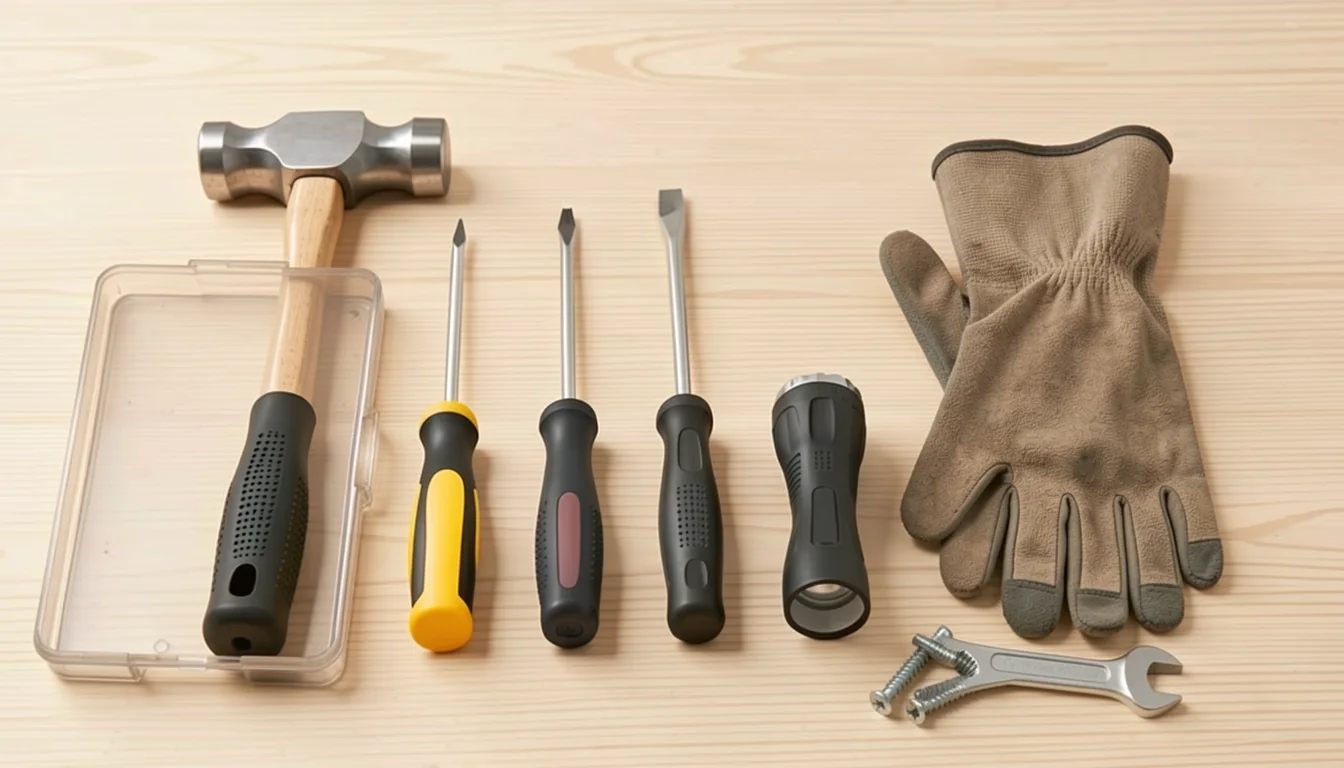
A claw hammer handles picture hanging, light assembly work, and removing small nails. A set of screwdrivers, ideally with both flathead and Phillips heads in a couple of sizes, or a single multi-bit screwdriver, covers most fastening tasks around the house. Pliers, particularly a combination or slip-joint pair, are useful for gripping, bending, and pulling in situations a hand alone cannot manage. An adjustable wrench handles nuts and bolts of varying sizes without needing a full wrench set. A tape measure is essential for furniture, curtains, and any project where getting a dimension wrong means a return trip to the store. A level, even a small one, keeps shelves and hung items looking intentional rather than crooked.
Beyond that core group, a utility knife is handy for opening boxes and trimming materials, and a stud finder can save real frustration when hanging anything heavier than a small picture frame. These are worth adding once the essentials are covered, rather than buying on day one.
| Tool | Typical Use | When to Buy It |
|---|---|---|
| Claw hammer | Driving and removing small nails, light assembly | First purchase |
| Screwdriver set or multi-bit driver | Tightening hardware, furniture assembly, battery covers | First purchase |
| Combination pliers | Gripping, bending wire, pulling stuck fasteners | First purchase |
| Adjustable wrench | Nuts and bolts of varying sizes | First purchase |
| Tape measure | Furniture, curtains, spacing for hung items | First purchase |
| Small level | Straightening shelves, frames, and mounted fixtures | First purchase |
| Utility knife | Opening boxes, trimming materials | Second round |
| Stud finder | Locating wall studs before mounting heavier items | Second round |
| Cordless drill | Driving screws quickly, drilling holes | Once assembly or mounting tasks become frequent |
Fasteners and Small Hardware That Add Up Fast
Tools get most of the attention, but fasteners and small hardware are what actually get used most often, and they’re also the easiest category to let sprawl out of control. A small assortment of screws in a few common sizes, some picture hanging hardware, nails in a couple of sizes, and a roll of general-purpose tape covers a large share of everyday needs.
Rather than buying large boxes of a single fastener size, a compartmentalized organizer with a modest variety tends to be more useful for household purposes, since household repairs rarely call for dozens of the exact same screw. Save hardware that comes with furniture or fixtures, since manufacturers often include spares, and label or bag them by item if you’re storing extras for something you might need to service again later.
For anything load-bearing, like hanging a mirror, a shelf, or wall art of meaningful weight, check the item’s own packaging or instructions for the hardware and weight rating the manufacturer recommends rather than guessing. Product labels and included manuals are the most reliable source for what a specific fastener or anchor is rated to hold, since this varies by wall type, product, and manufacturer.
A Small Grab Bag for Quick Fixes
It can help to set aside a small pouch or container specifically for the fasteners and hardware you reach for most, separate from any bulkier bulk packaging. Keeping this grab bag near the rest of the toolkit, rather than scattered through kitchen drawers, means a quick fix does not turn into a five-minute search first.
Where Power Tools Fit In
A cordless drill is usually the first power tool worth adding, since it speeds up both driving screws and drilling pilot holes, tasks that come up often once you move beyond the most basic fixes. Beyond a drill, most households do not need a wide range of power tools right away. It’s generally more practical to add a specific power tool when a specific project calls for it rather than buying a full lineup in advance.
Power tools also come with a different level of risk than basic hand tools, so it’s worth taking safety seriously even for tools that seem simple to operate. Always read the manufacturer’s manual for a specific tool before first use, since guards, settings, and safe operating procedures vary by model. For general safety practices around hand-held power tools, including guarding, grounding, and safe handling, OSHA’s overview of hand power tools is a useful reference point, even for tasks that happen at home rather than on a job site. Eye protection is worth keeping on hand alongside any power tool, and it’s worth double-checking a tool is unplugged or the battery is removed before changing bits, blades, or attachments.
If a project involves wiring, gas lines, structural changes, or anything you’re not confident diagnosing yourself, it’s worth bringing in a licensed or qualified professional rather than treating a basic toolkit as a substitute for that expertise.
Storage That Keeps a Small Toolkit Usable
A toolkit only stays useful if you can actually find what you need when something comes up. A single toolbox, a canvas tool bag, or even a labeled bin works fine for a starter kit, as long as it has enough internal organization that small items like screws and picture hooks aren’t loose against hand tools.
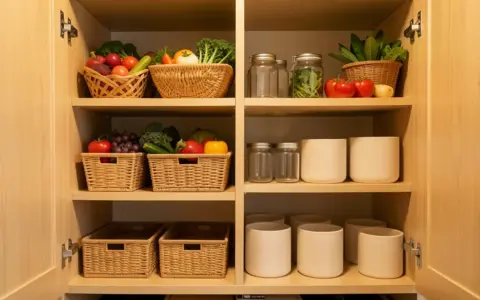
Keep the kit in one consistent spot rather than splitting tools between a garage, a closet, and a kitchen drawer. When tools are scattered, it’s common to lose track of what you actually own and end up rebuying something that was already in the house. Choose a dry cabinet or secured closet shelf that is convenient for authorized users but locked, latched, or otherwise inaccessible to children and anyone who could be harmed by blades, batteries, sharp fasteners, or power tools.
If you’ve recently moved and are still deciding where things belong, it’s worth settling on a permanent home for the toolkit early rather than letting it live in a moving box indefinitely. Our guide on how to unpack after a move without living out of boxes for weeks covers how to prioritize which household systems, including a basic toolkit, are worth setting up first.
A basic toolkit also earns its keep well beyond one-off repairs. Many of the small maintenance tasks that come up around changes in weather, tightening an accessible storm-door hinge, adjusting a window according to its hardware instructions, or replacing a reachable cabinet pull, draw on the same core set of tools. Work involving ladders, roofs, gutters, electrical systems, structural parts, or conditions outside your skill and safe reach belongs with a qualified professional. If you’re mapping out what needs attention as the seasons shift, our guide on how to prepare your home for seasonal changes walks through more of those recurring tasks.
Common Mistakes to Avoid When Building a Toolkit
A few recurring habits tend to turn a useful basic toolkit into either a cluttered mess or an expensive collection of unused gear.
Buying a large pre-assembled kit as a first purchase. These often bundle lower-quality versions of tools alongside items you may never touch, like specialty sockets or niche attachments. Buying a handful of well-made essentials individually is usually more useful in the long run.
Letting fasteners and hardware spread across multiple drawers. Once screws, nails, and hooks are scattered through the house, even a well-chosen tool collection becomes hard to use efficiently, since half the job becomes searching instead of fixing.
Skipping the manual on a new power tool. Settings, guards, and safe operating steps vary between models, and skipping the manual in favor of guessing increases the chance of a mistake or an unsafe setup.
Guessing at hardware weight ratings. Using whatever screw or anchor happens to be on hand for a heavier item, like a mounted shelf or a mirror, rather than checking the manufacturer’s stated rating, can lead to a fixture pulling loose later.
Making structural or wiring changes without professional help. A basic toolkit is built for everyday fixes, not for tasks like electrical work or structural repairs that call for licensed expertise.
Storing the toolkit somewhere inconvenient. A kit buried in a garage corner or a closet that’s hard to reach tends to go unused even when it has exactly the right tools for the job.
Frequently Asked Questions
How many tools do I actually need to get started?
A small core group, generally a hammer, a screwdriver set or multi-bit driver, pliers, an adjustable wrench, a tape measure, and a level, covers most everyday household fixes. Everything else can be added as specific projects come up rather than purchased up front.
Is it worth buying a pre-assembled toolkit as a starter set?
It depends on the kit. Some starter sets offer reasonable basics at a fair price, but many bundle a large number of niche tools alongside lower-quality versions of the essentials. Comparing a bundled kit’s contents against the core list above can help you decide whether it’s genuinely useful or mostly filler.
Do I need a drill right away?
Not necessarily. A drill is useful once you’re regularly assembling furniture, mounting items, or drilling pilot holes, but many first fixes, like tightening hardware or hanging a light picture, don’t require one. It’s a reasonable second or third purchase for most households rather than a required first one.
How should I store screws, nails, and other small hardware?
A small compartmentalized organizer or labeled bin kept alongside the rest of the toolkit tends to work better than loose hardware in a kitchen drawer. Saving spare hardware that comes with furniture or fixtures, and keeping it grouped by item, also makes it easier to find later if something needs adjusting or servicing.
What should I do if a repair seems beyond a basic toolkit?
If a task involves wiring, gas lines, plumbing beyond a simple fixture swap, or any structural change, it’s best to consult a qualified professional rather than attempting it with general-purpose tools. Renters should also check their lease or contact their landlord before making changes that affect fixtures or the structure of the unit.
Bringing It Together
A basic home toolkit doesn’t need to be extensive to be useful, it needs to match the repairs your household is actually likely to face. Starting with a small set of quality hand tools, keeping fasteners organized in one place, adding power tools only as specific projects call for them, and storing the whole kit in a consistent, secured location will cover the overwhelming majority of everyday fixes without turning into a pile of unused gear. From there, the kit can grow naturally, one real need at a time, instead of all at once based on guesswork.