

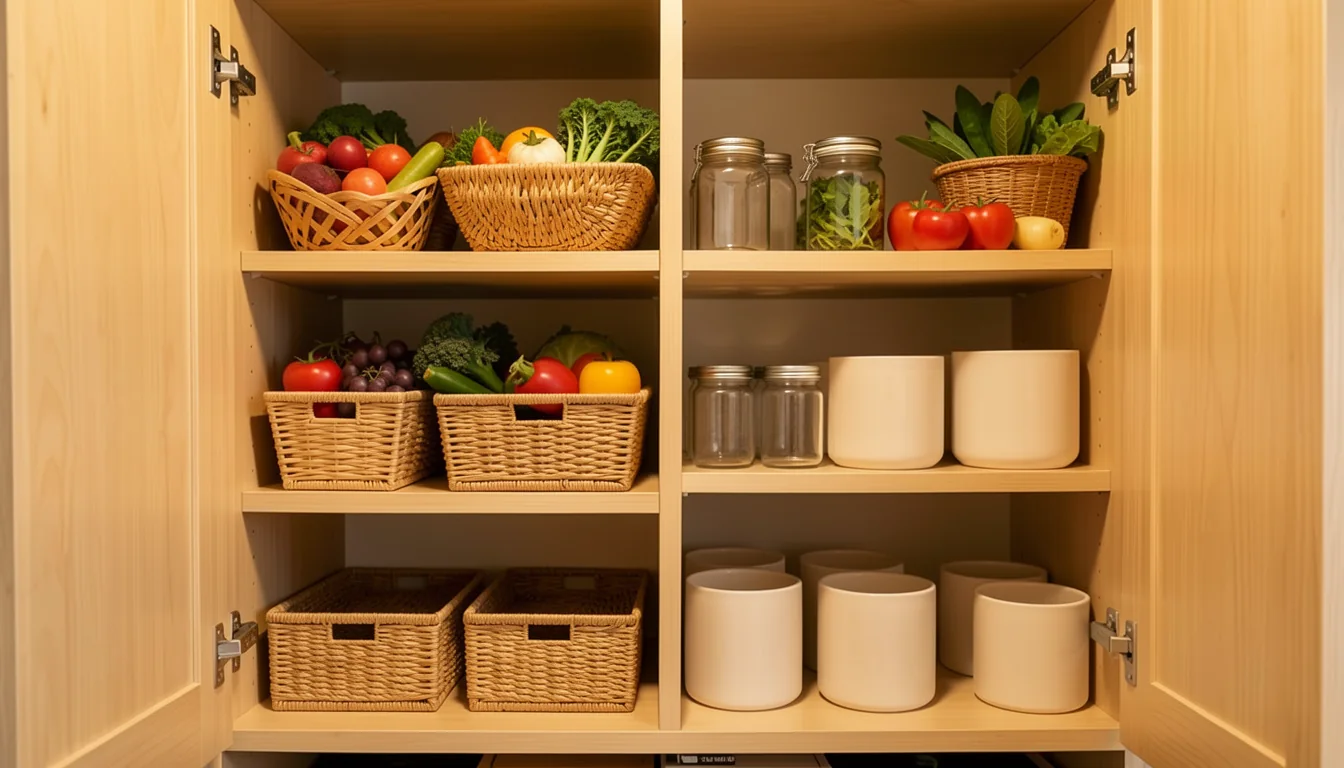
A useful pantry is not a display of matching containers. It is a working map of the meals your household makes. When ingredients live near the foods they routinely join, you can see what is available, gather what dinner needs, and return groceries without reorganizing the whole cabinet.
To organize a pantry around real meals, begin with evidence: recent dinners, reliable breakfasts, packed lunches, snacks, and the backup foods you reach for on demanding days. Then give those patterns clear zones. The result should reduce searching and forgotten duplicates while remaining flexible when your menu changes.
Start with meals, not pantry products
List the meals or meal types you made most recently without trying to improve the list. Include the plain options: oatmeal, toast, sandwiches, pasta, rice bowls, soup, tacos, baking projects, or whatever genuinely appears. Add the ingredients normally stored outside the pantry only as context; the goal is to understand which pantry items need to be gathered together.
Mark ingredients that cross several meals. Oil, rice, canned tomatoes, broth, flour, or seasonings may serve many patterns, so they deserve a central shared zone rather than being duplicated in multiple meal bins. Then mark ingredients used almost exclusively together. Tortillas, shelf-stable toppings, and canned beans might form a useful meal group if that combination reflects your kitchen.
Do not plan around an aspirational menu. A shelf dedicated to elaborate baking is wasted if you bake twice a year, while breakfast items squeezed behind it create daily friction. Pantry organization works when access mirrors frequency.
Empty only enough space to make decisions
You do not have to unload every shelf onto the floor. Work in one section at a time and keep a clear counter or table for sorting. Remove obvious trash, inspect packages, and set aside anything that belongs elsewhere. Keep foods protected from spills and household chemicals while you work.
Before returning an item, read its storage directions and check the package condition. Follow manufacturer instructions and discard food when official guidance or obvious package damage indicates it is not safe to use. The U.S. Food and Drug Administration’s food storage guidance explains general practices and the importance of following label directions.
Create a decision area for uncertain items
Use one small box for foods that require a decision: an unfamiliar ingredient, an open package you need to assess, or something another household member may want. Put a short review time on the box. It is not a permanent pantry category. Keeping uncertainty contained lets you finish the active shelf without making a rushed choice.
Measure usable space and its constraints
Record shelf width, depth, and clear height, but also note what blocks use. Hinges may narrow a cabinet edge. A deep shelf may be hard to reach behind. Wire shelving may not support small packets well. A low shelf may be accessible to children or pets, which affects what belongs there. Renters should respect lease terms and avoid permanent alterations without permission.
Identify three reach levels: easiest, acceptable, and inconvenient. The easiest area should hold high-frequency items and active meal zones. Acceptable space can hold refills or weekly ingredients. Inconvenient space is better for lightweight, occasional items that are still safe to retrieve. Avoid placing heavy or spill-prone packages where reaching requires an unstable stretch.
Leave some open room. A pantry packed to the front edge cannot accept groceries or allow stock to rotate. Breathing room is functional capacity, not wasted space.
Build zones around repeated meal patterns
A meal zone holds the shelf-stable ingredients that you commonly gather at the same time. It might be “weekday breakfast,” “quick pasta,” “packed lunch,” or “soup night.” Use language household members already say. “Grains” may be technically correct, but “breakfast” can be more useful if everyone searches by meal.
Not every item needs a meal zone. Shared staples should remain visible in a central area, and snacks may need their own access rules. The purpose is to reduce repeated motion, not force every package into a theme.
| Zone type | What may belong there | Best location cue |
|---|---|---|
| Frequent meal | Ingredients gathered together several times a week | Easiest reach near the preparation area |
| Shared staples | Ingredients used across many meal patterns | Central, visible shelf |
| Breakfast or lunch | Foods used during a predictable routine | Grouped in the order people reach for them |
| Backup meal | A complete shelf-stable option for difficult days | One clearly marked section, not scattered |
| Refill stock | Sealed extras already represented in active zones | Less convenient shelf with visible limits |
| Occasional use | Holiday, specialty, or infrequent ingredients | Upper or deeper area suited to the package |
Treat the table as a planning menu, not a requirement to create six zones. A small cabinet might combine frequent meals and shared staples. A walk-in pantry might separate several dinner patterns. Choose boundaries that make the next action obvious.
Place ingredients in the order you use them
Within a zone, arrange items to support the cooking sequence. If breakfast begins with oats and then toppings, place them close enough to gather in one motion. If packed lunches require bread stored elsewhere, place pantry fillings and reusable lunch supplies together. The zone should act as a prompt for the task.
Face labels forward when that helps identification, but do not sacrifice package directions or date visibility for a uniform appearance. Keep opened packages distinguishable from unopened refills. If two household members use the same zone differently, favor broad visibility rather than a tightly nested arrangement that only one person understands.
Give crossover ingredients one home
When one ingredient serves several meals, select one home and let the meal zones point mentally toward it. Duplicating an open container in each zone makes inventory harder to trust. Central staples work well near the middle of the pantry or near the main preparation surface, depending on the room.
Set zone limits before buying containers
A shelf edge, removable label, or existing box can define a zone during the test phase. The boundary matters more than the material. When the breakfast area is full, you can see that another package must wait, replace something, or move to designated refill stock. Without a limit, categories spread until every shelf becomes mixed.
Run the pantry through at least one ordinary grocery cycle before purchasing bins or risers. Watch what falls over, hides, or becomes difficult to lift. Then choose a tool that solves that specific problem. A shallow bin may corral packets; a shelf riser may reveal short cans; a turntable may help suitable containers in a corner. No organizer compensates for a zone that does not match behavior.
Use food-contact containers only as intended, and retain information needed for ingredients, allergens, preparation, dates, and storage. If you decant, choose a method that keeps those details available. Never place food in a container that could be mistaken for a household chemical, or vice versa.
Make active stock different from refill stock
Active stock is the package currently in use or next in line. Refill stock is a sealed extra. Separating them prevents several packages from being opened at once and makes the true supply easier to see. A small “refills” shelf can support many zones as long as it has firm space limits.
When unpacking groceries, check the active zone before sending an item to refills. Place products so older appropriate stock is visible and likely to be used first, while still following dates and package guidance. Do not rely on position alone to judge whether food is suitable; inspect the product and directions.
If refill space regularly overflows, reconsider the quantity coming into the pantry or whether an item still belongs in your normal meal map. The answer is rarely another hidden bin.
Design a practical snack area
Snack storage should reflect who uses it and when. For a household with children, adult decisions about access, allergies, package instructions, and supervision come first. Place approved choices where intended users can reach them safely, and keep restricted foods elsewhere. In a shared adult household, dividing snacks by person may prevent confusion, while grouping by type may work better when everything is communal.
Do not over-portion simply for appearance. Original packaging may carry essential allergen and storage details. If small items become visually noisy, place the intact packages in an open-front bin. A single boundary can calm the shelf without erasing information.
Connect the pantry to meal planning
Before deciding what to cook, scan meal zones rather than reading every package. A thin pasta zone or a full soup zone provides immediate direction. Keep a small wipeable note nearby for ingredients that are missing from otherwise complete patterns. The note should capture gaps, not become a second inventory database.
When plans change, move ingredients only if the change becomes a pattern. One new recipe does not require a permanent zone. Store its components with shared staples or in a temporary project bin, then decide after you make it. This keeps the pantry responsive without constant remodeling.
Pantry planning also connects to cold storage. Ingredients are easier to use when you can see their refrigerated partners. A compatible refrigerator organization system can use similar active, refill, and meal-pattern logic without treating the two spaces as identical.
Create a five-minute reset
Choose a natural trigger such as after putting away groceries, before writing a meal list, or after preparing a recurring dinner. Return wandering items, bring older stock forward where appropriate, close packages as directed, and note gaps. Stop after the essential flow is restored.
A deeper review can happen when a shelf becomes hard to read or meal patterns shift. Work one zone at a time. Wipe surfaces using methods appropriate for the shelf material and keep cleaners away from food according to their labels. If cleaning supplies share nearby cabinetry, a separate plan for under-sink organization can reinforce the boundary between food and household products.
Assign a home for incoming groceries
Grocery unloading is where organization either holds or dissolves. Teach the route: active package first, sealed refills second, occasional items last. Keep reusable bags out of the pantry aisle once emptied. If an incoming item has no home, pause and decide instead of pushing it behind a similar package.
Common pantry-organization mistakes
Sorting only by ingredient type
Broad categories can look orderly but force you to visit many shelves for one simple meal. Keep technical categories where they help, especially for shared staples, but let repeated cooking patterns define the most active zones.
Buying containers before observing packages
Bins that are too deep hide food; lids add steps; narrow turntables waste corners when packages do not fit. Test with what you own, then solve a demonstrated problem.
Hiding dates and instructions
A uniform pantry is not useful if nobody can verify allergens, preparation directions, or storage requirements. Keep original information attached or reliably available.
Creating unlimited backup space
Deep refill storage can conceal duplicates and make the active shelf appear empty. Give extras a visible boundary and review it while unloading groceries.
Keeping a permanent “miscellaneous” bin
Miscellaneous is a short decision queue, not a destination. Review each item: assign it to a meal, a shared-staple home, occasional storage, or an appropriate exit.
Ignoring other cooks
A system that works only for the person who built it will drift. Ask others where they expect to find common ingredients and use labels that match household language.
Adjust when the menu changes
Meal patterns change with seasons, schedules, dietary needs, housemates, and available cooking time. Review zones when you notice repeated searching or when a once-active shelf remains untouched. Move boundaries rather than trying to preserve the original layout.
Temporary needs deserve temporary space. A guest, school break, or new recipe project can use a removable bin with a clear end point. When the period ends, return remaining items to their normal homes after checking storage requirements. This prevents exceptions from quietly becoming clutter.
Photographing the successful layout can help household members reset it, but keep the standard realistic. The goal is recognizable zones and visible food, not exact package alignment.
Frequently asked questions
Should pantry items be organized by meal or by food type?
Use both where each is strongest. Repeated meal ingredients benefit from being together, while crossover staples need one central home. The right balance minimizes searching and keeps inventory understandable.
What if I have a very small pantry?
Prioritize active stock, your most frequent meals, and a tightly limited refill area. Use shelf depth carefully and move genuinely occasional items to another appropriate location. Avoid filling scarce space with empty organizers.
Do I need matching containers?
No. Containers are useful when they prevent a specific problem such as falling packets or hidden short packages. Existing boxes, shelf boundaries, and removable labels can establish the system first.
How should I handle ingredients used in many recipes?
Give crossover ingredients one central, visible home near the active area. Avoid opening duplicates in several meal zones. Household members can learn one dependable location.
How often should I reorganize the pantry?
Reset lightly at a recurring trigger and reconsider the layout when meal patterns or access needs change. You do not need a full unload on a fixed universal schedule.
Final takeaway
Organize a pantry as a tool for cooking, not as a storage photograph. Let recent meals define the active zones, place shared ingredients where everyone can find them, and give refills and exceptions firm limits. When groceries have an obvious route and each meal is easier to gather, the pantry remains useful even when packages and plans change.