

Useful small balcony ideas start with boundaries, not decoration. A balcony is an outdoor extension of the home, but it is also a weather-exposed structure with a door, guard, drainage path, neighbors, and building rules. Before adding furniture or plants, identify what must remain clear and what activities the space can realistically support. Function comes from giving a few actions enough room rather than squeezing in a miniature version of a backyard.
Choose one primary job and, at most, one secondary job. The balcony might be a place for morning coffee that also dries a small approved item, or a plant-tending spot with a chair that folds away. It is unlikely to work comfortably as a dining room, garden, lounge, storage locker, exercise zone, and pet run at the same time. A narrow purpose produces more usable space than an ambitious furniture plan.
Read the empty balcony as a floor plan
Remove movable clutter and stand inside the doorway. Note how the door opens, where a screen slides, and how a person would exit quickly. Locate drains, scuppers, utility panels, outlets, hose connections, air-conditioning equipment, and any area building staff may need to reach. Do not assume an unused corner is available if it serves drainage, ventilation, or maintenance.
Measure the usable floor after preserving those routes. Record the narrowest passage, not only the total width. A chair may technically fit yet trap someone behind it or stop the door from opening fully. Mark the clear zone temporarily with painter’s tape only if the surface and building rules permit it. Otherwise, use a sketch with dimensions.
Look upward and outward. Observe sun at the times you would use the space, prevailing wind, rain exposure, sightlines from nearby units, and noise traveling in both directions. A balcony that is shaded at breakfast may be hot in late afternoon. Wind can turn a light cushion or empty planter into a falling hazard. Make decisions from several ordinary days, not one calm hour.
Check permission before changing the space
Review your lease, condominium or homeowners association rules, building notices, and local requirements. Common restrictions may address open flames, grills, smoking, exterior appearance, hanging items, drilling, privacy screens, rugs, planters on rails, electrical devices, holiday lighting, storage, pets, and drying laundry. The applicable documents for your home decide what is allowed; there is no universal balcony rule.
Ask building management when language is unclear, and keep written approval for an installation. Do not drill into walls, railings, membranes, or ceilings unless expressly authorized and completed in the approved manner. Penetrating a waterproof surface or structural component can create damage beyond your unit. Adhesive hooks and clamp-on products also need permission and must be compatible with the substrate and load.
Find the posted or documented load information if you plan to add heavy planters, dense furniture, exercise equipment, or substantial storage. Do not estimate structural capacity from appearance. Wet soil and water-filled containers can be much heavier than they seem when empty. Questions about structure belong with the property manager, building owner, or qualified professional.
Write a one-sentence functional brief
Complete this sentence: “This balcony should make it easy to ___ while preserving ___.” An answer such as “read for twenty minutes while preserving a clear exit path” gives every object a test. A wide coffee table that blocks movement fails even if it looks attractive. A folding side shelf may pass if it is permitted, stable, and closed when not in use.
Then list the minimum physical supports for that action. Reading may need one comfortable seat, a place for a drink, shade at a certain hour, and gentle light if approved. Plant care may need accessible pots, a contained watering method, a place for one small tool, and a route that keeps soil away from the drain. Do not add a “nice to have” until the core action works.
Keep the secondary function subordinate. If the balcony’s main job is sitting, plants should shape the edge without taking over legroom. If the main job is plants, a folding stool may be enough seating. This priority also simplifies cleanup when weather changes.
Choose furniture by movement, not showroom scale
Use tape dimensions on an indoor floor or cardboard templates to test footprints before bringing pieces outside. Include the space needed to pull out a chair, sit, stand, and carry the item through the doorway. A narrow bench may occupy less visual space than two chairs but be harder to move and less flexible. Folding chairs can free the floor, provided they are stable and have a secure approved storage position.
Favor items designed for the exposure they will receive, and follow care and assembly manuals. Outdoor-rated does not mean maintenance-free or suitable for every wind condition. Check fasteners and glides, keep metal that can rust from staining surfaces, and avoid sharp edges in the main path. Furniture should sit level without improvised blocks that can shift.
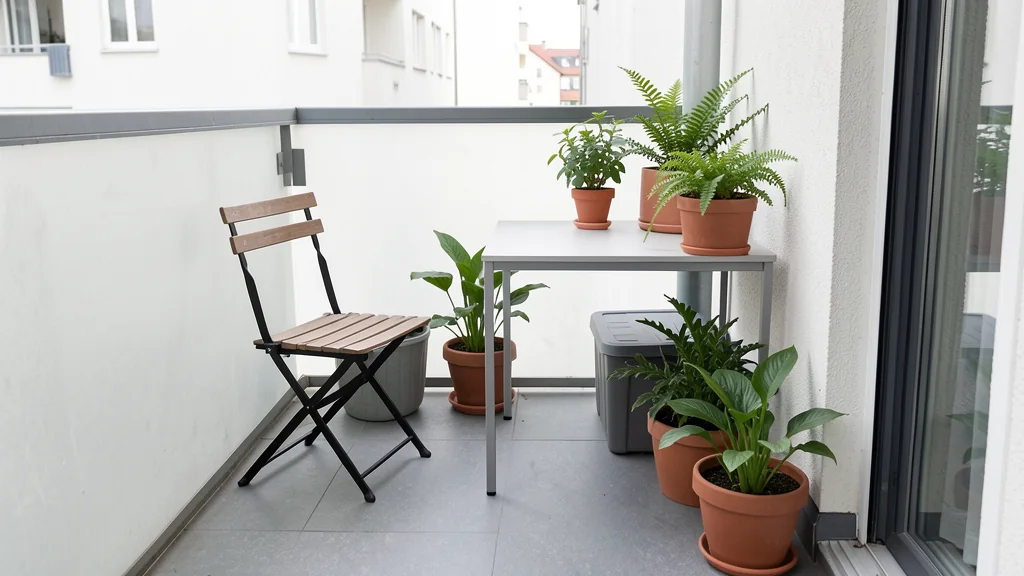
One surface can serve several moments. A compact side table may hold a cup, a book, or plant-care tools during use, then clear completely. Nesting pieces can help only if the stacked form remains stable. Storage seating sounds efficient, but an outdoor box can quickly become heavy, damp, or crowded; use it only when allowed, ventilated as designed, and kept away from required access.
| Need | Compact option | Check before using it |
|---|---|---|
| Occasional seating | One folding chair or a narrow upright chair | Stability, safe open position, door clearance, wind plan, and approved storage |
| Small work surface | Light side table or permitted fold-down surface | Level footing, attachment rules, edge clearance, and load instructions |
| Plant display | A few floor pots or an approved freestanding tier | Wet weight, drainage capture, wind, sunlight, pet safety, and guard clearance |
| Privacy | Building-approved screen or strategic plant placement | Wind load, attachment permission, exterior appearance, light, and neighbor impact |
| Evening use | Approved portable light suitable for its location | Outdoor rating, electrical instructions, cord routing, glare, and building policy |
Use vertical space without turning the railing into storage
Vertical storage can preserve the floor, but every raised object introduces questions about attachment, falling, watering, and wind. A permitted freestanding shelf placed away from the guard may be safer and easier to alter than a collection of rail-mounted containers. Follow the unit’s assembly, anchoring, outdoor-use, and load directions, along with building rules.
Never set an unsecured object on top of a railing or hang something outward where it can fall onto people or property. Avoid covering guard openings or creating climbable arrangements, especially where children may be present. Do not attach screens or trellises that could increase wind force on the guard without explicit approval and appropriate professional review.
Keep visual density low. One vertical grouping leaves more calm open space than small objects scattered across every plane. The same principle helps indoors; a multipurpose guest room also works best when movable objects support a clearly defined primary use.
Add plants as living equipment
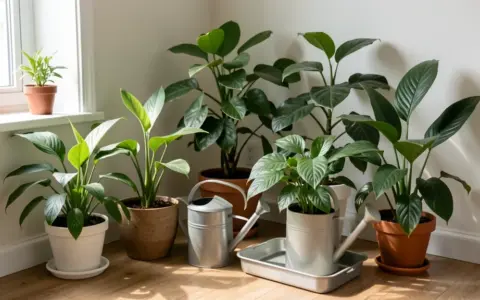
Select plants for the real light, wind, temperature, and care you can provide, not only for appearance. Verify whether each species is appropriate around household pets or children. A low-maintenance plant care routine can inform your observation habits, but outdoor containers dry, chill, heat, and drain differently from indoor pots.
Use stable containers with drainage managed so water and soil do not flow onto neighbors, stain the facade, or obstruct the balcony drain. Catch trays must not become standing-water reservoirs. Empty or manage them as appropriate for the plant, weather, and local mosquito guidance. Raise pots only with stable products intended for the purpose, and confirm that the surface underneath can dry.
Group plants by care needs and leave enough room to inspect the pot, guard, wall, and floor. A dense green screen can hide moisture problems, pests, or failing attachments. During severe weather or seasonal changes, follow plant-care and building guidance for relocating or securing containers. Do not move a large wet pot alone if its weight or shape makes handling unsafe.
Manage comfort with reversible layers
Shade should match the sun and building permissions. A portable umbrella can be too large or wind-sensitive for a small balcony, while a screen can affect the exterior and airflow. Do not improvise fabric tied to railings. Use only approved products designed and installed for the location, and close or remove them whenever their instructions or weather conditions require.
For privacy, begin with orientation. Turn the chair toward a view, place an allowed planter to soften a direct sightline, or use the wall side rather than enclosing the perimeter. Complete visual isolation may reduce light and airflow and add wind load. Respect neighbors by keeping any screen within your boundary and the building’s appearance rules.
Textiles add comfort but also add maintenance. Choose only items suited to exposure, limit the quantity, and provide a dry approved place indoors when conditions change. A single washable cushion is easier to retrieve than an outdoor “room” full of fabric. Rugs can conceal blocked drains or hold moisture against a surface, so use one only if building guidance and the flooring system permit it.
Create a two-minute close-down routine
Before leaving the balcony, bring in loose lightweight objects, empty cups, close permitted shade, and return folding furniture to its secure state. Check that no object can roll, tip, or blow through an opening. This closing action is more reliable when the balcony contains few pieces and each has an assigned position.
After rain or watering, verify that drainage remains open and no water is traveling toward the interior. Watch the door threshold, planter trays, furniture feet, and any approved floor covering. Report recurring pooling, cracking, loose guards, or water intrusion through the building’s process rather than covering the area.
At seasonal transitions, reconsider the whole arrangement. Sun angle, storms, plant size, and how you use the home can change. A functional balcony is allowed to become simpler. Removing one oversized piece may improve the space more than adding another organizer.
Common small balcony mistakes
- Starting with a furniture set: coordinated pieces can consume the route needed to enter, sit, and exit.
- Treating railings as shelves: elevated unsecured objects can fall, while attachments may violate rules or load the guard.
- Hiding the drain: rugs, deck tiles, pots, and boxes can make debris or pooling harder to see.
- Ignoring wet weight: soil, stored water, and saturated textiles add load and become difficult to move.
- Creating privacy with improvised fabric: wind can place substantial force on material and its attachment points.
- Using indoor-only electrical items outside: location ratings, outlet protection, cord placement, and manuals matter.
- Keeping too many functions active: constant rearranging is a sign that the balcony needs a clearer priority.
Frequently asked questions
What is the first thing to add to a tiny balcony?
Add nothing until you map the door, exit route, drainage, guard, utilities, and building restrictions. After that, choose the smallest stable item that supports the primary function, often one seat or one plant-care surface rather than a full set.
Can I hang planters on the railing?
Only when your building allows it and the product, railing, installation, load, wind exposure, and orientation are all appropriate. Never assume a clamp is compatible or place a container where it could fall outward. Freestanding floor placement may be a simpler option.
How can I create privacy without drilling?
First adjust seating direction and use permitted freestanding placement. If you want a screen, obtain building approval and use a product designed for the location. “No drilling” does not remove concerns about wind, guard loading, appearance, or emergency access.
Is outdoor storage a good use of balcony space?
Only for a narrow set of allowed, weather-appropriate items in a container that preserves circulation, drainage, and access. A balcony should not become overflow storage for chemicals, combustibles, food, cardboard, or objects prohibited by building rules.
What should I do before a storm?
Follow official local alerts, building instructions, and every product manual. Bring in or secure items as directed without waiting for wind to intensify, close approved shade, and keep the exit usable. Do not lean outside the guard or attempt a risky last-minute retrieval.
Final takeaway
A small balcony becomes functional when its limits remain visible. Protect the doorway, route, guard, drainage, neighbors, and building requirements; then support one main activity with the fewest stable pieces. Test dimensions before buying, manage every raised or lightweight object for wind, and close the space down after use. The result may contain less furniture and fewer decorations than an inspiration image, but it will be easier to enter, maintain, adapt, and enjoy.