

A guest room may spend long stretches without an overnight visitor, holding a bed and dresser that do little for the household between stays. That can be a lot of square footage to dedicate only to occasional visits. The good news is that a guest room does not have to choose between being ready for company and being useful the rest of the time. With the right furniture choices, storage habits, and a quick-reset routine, the same room can work as an office, a workout corner, a hobby space, or a reading nook on an ordinary Tuesday, then return to a comfortable place for a visitor without a major room overhaul.
The key is treating the room as flexible from the start rather than trying to retrofit a fully furnished guest suite later. This guide walks through how to plan the layout, choose sleep furniture that pulls double duty, organize storage so your everyday stuff and your guest supplies do not collide, and build a reset routine that does not eat your whole weekend before someone arrives.
Start by Naming the Room’s Second Job
Before moving any furniture, decide what the room needs to do when it is not hosting guests. A room trying to be everything at once, an office, a gym, a craft studio, and a library, usually ends up serving none of those functions well. Pick one primary secondary use and, if space allows, one smaller supporting use.
Common combinations that tend to work well together include a home office paired with light exercise equipment, a reading and hobby space paired with seasonal storage, or a workout corner paired with a spot to fold laundry. Whatever you choose, that primary use should get first claim on the floor space, wall outlets, and lighting, with the guest function built around it instead of the other way around.
Walk through the room and think about how you actually spend time in your home right now. If you already work at the kitchen table every day, the office use case is probably the one that will get used. If a piece of exercise equipment has been collecting laundry in a closet, this might be the room that gives it a real home.
Consider Who Visits and How Often
How you configure the room should also depend on your actual guest patterns. Someone who hosts an out-of-town parent for a week twice a year has different needs than someone who occasionally puts up a friend for one night. Frequent, longer stays justify a bit more dedicated guest infrastructure, like a full closet section reserved for a visitor’s clothes. Occasional short stays mean you can lean harder into the everyday function and keep guest accommodations simpler.
Choose Sleep Furniture That Does Double Duty
The bed is usually the biggest obstacle to making a guest room feel like anything other than a guest room. A permanent queen or full bed anchors the whole space around sleeping, even when no one is sleeping there. Swapping to furniture that converts or tucks away changes the entire feel of the room.
A daybed is one of the most straightforward swaps. It reads as a couch or lounge seat during the day and functions as a single bed at night, which makes it a natural fit for a room that is doing double duty as a reading nook, home office seating area, or media corner. Trundle versions add a second sleeping surface that stays hidden underneath until it is needed, which is useful if you sometimes host two guests at once, like a parent and a sibling.
A quality sofa bed or futon is another option, particularly if the room’s main daytime job is more like a den or hangout space than a workspace. Modern folding mattresses have improved significantly, though comfort still varies a lot between models, so if overnight comfort matters to your guests, it is worth testing one in person before buying rather than relying on photos alone.
A Murphy bed is the most dramatic transformation. Folded up, it disappears into a wall unit and gives back nearly the entire floor, which is ideal for a room trying to function as a full office or workout studio most of the time. The tradeoff is upfront cost and, in many buildings, a more involved installation, so check with your building or landlord before committing to any structural or wall-mounted setup, especially in a rental.
If you are renting, always confirm what your lease allows before mounting anything to a wall or making changes that affect the room’s structure. Property management or your landlord can tell you what is permitted and what might affect your security deposit.
Air Mattresses as a Lightweight Backup
For rooms hosting guests only rarely, a good air mattress stored in a closet can stand in for permanent guest bedding altogether. This frees the room completely for everyday use without dedicating floor space to sleeping furniture. The tradeoff is more setup time and a firmness that will not suit everyone, so this works best for short, infrequent stays rather than week-long visits.
Organize Storage So Two Functions Do Not Collide
Once the furniture decision is made, storage is what keeps a dual-purpose room from feeling chaotic. The goal is to separate your everyday items from your guest supplies clearly enough that setting up for a visitor does not mean digging through craft bins or moving exercise gear out of the way.
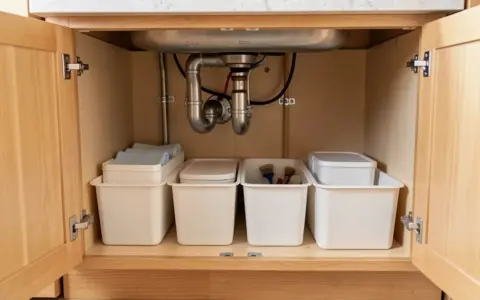
A dedicated guest supply zone works better than scattering guest items throughout the room. This could be a single closet shelf, a storage ottoman, or a labeled bin under the bed that holds spare linens, a spare pillow, and any toiletries you keep on hand for visitors. When everything a guest might need lives in one predictable spot, converting the room takes minutes instead of a search-and-gather scramble.
If the room’s everyday use involves its own supplies, like office files, craft materials, or workout accessories, give those a separate storage zone too, ideally one that can be closed off or tidied quickly. Closed cabinets, baskets with lids, or a closet with doors all help the room look guest-ready fast, since visible clutter is usually what makes a converted room feel unfinished rather than intentional.
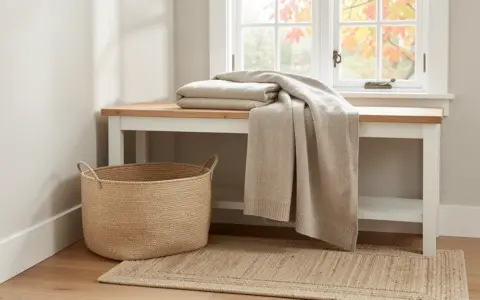
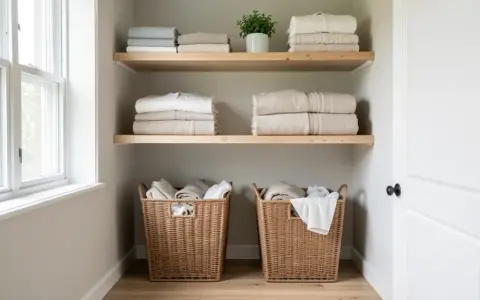
For linens specifically, keeping guest sheets, towels, and blankets compact and well organized matters more in a shared-purpose room than in a room with no space constraints. If storage is tight, our guide on storing linens in limited space covers ways to keep bedding accessible without it taking over a closet.
Closet Space Deserves a Plan Too
The closet in a multipurpose guest room often becomes a catch-all, which defeats the purpose of keeping the room organized. Divide it mentally, or physically with bins or shelf dividers, into a guest section and an everyday section. Guests generally need less closet space than you might assume, usually just a few hangers and a shelf, so resist the urge to keep the whole closet guest-ready year-round when it could be supporting the room’s daily function instead.
Furniture and Layout Choices That Support Both Roles
Beyond the bed itself, a few furniture decisions make the biggest difference in how smoothly a room can shift between its two jobs.
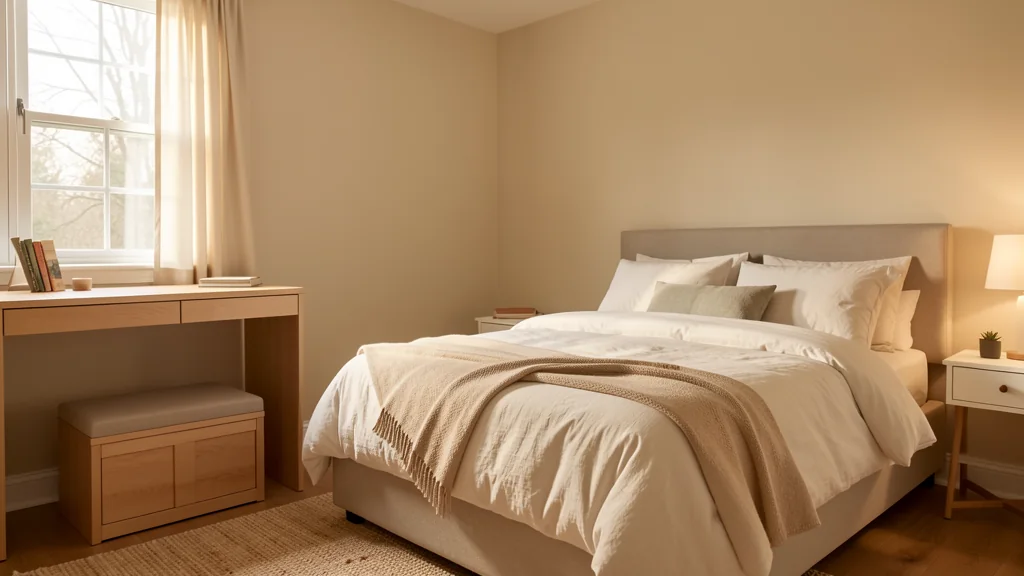
Look for pieces that serve more than one purpose on their own. A desk with drawers can double as a nightstand replacement when a guest is staying. An ottoman with hidden storage can hold extra bedding while also functioning as a footrest or extra seating during the day. A bookshelf or open shelving unit can display everyday items like books or plants while also holding a small stack of guest towels on a lower shelf, out of sight but within reach.
Keep a clear path from the door to the bed or seating area. Rooms that try to fit too much furniture into a tight footprint end up feeling cramped no matter which function is active, and a guest navigating an unfamiliar room in low light will appreciate a layout that is easy to move through.
Lighting is often overlooked in guest rooms because the primary use, working, exercising, or crafting, may have different lighting needs than what makes a room feel comfortable and calm for sleeping. Layering a few light sources, an overhead fixture, a desk or task lamp, and a softer bedside or floor lamp, lets the room adjust its mood depending on which job it is doing that day.
| Guest Room Function | Furniture to Prioritize | Storage Approach |
|---|---|---|
| Home office | Desk, ergonomic chair, daybed or sofa bed | Closed file storage separate from guest linen bin |
| Workout space | Open floor area, wall-mounted or folding equipment, Murphy bed | Equipment stored against walls or in a closet when not in use |
| Reading or hobby nook | Daybed, armchair, small side table | Shelving that mixes books or supplies with folded guest bedding |
| Craft or sewing room | Work table, storage cart, futon or trundle bed | Rolling bins that tuck under the table between projects |
Build a Reset Routine That Does Not Eat Your Weekend
The final piece is having a repeatable process for converting the room before a guest arrives, and converting it back afterward. Without a routine, this transition tends to become a stressful last-minute scramble every time.
Write down, even just mentally, the specific steps your room needs: clear the desk, fold up the exercise mat, pull the linen bin from the closet, swap the desk lamp for the bedside lamp. Doing this once and keeping the list short means future changeovers become a checklist rather than a guessing game.
Set a realistic time expectation based on your room, furniture, mobility, and storage. The reset should feel manageable enough that you will actually do it before a visit. If conversion consistently becomes a major project, treat that as a sign that storage zones or the room’s secondary function need to be simplified rather than as proof that the multipurpose concept cannot work.
After guests leave, resist the urge to leave guest bedding out or the desk unset for days. Returning the room to its everyday function promptly means you actually get the use out of it that justified converting the room in the first place, rather than it becoming a stalled guest room with an unused desk in the corner.
If you are setting up this system shortly after a move, it can help to establish the room’s dual purpose early rather than letting boxes and undecided furniture linger. Our guide on how to unpack after a move without living out of boxes has more on prioritizing rooms so a space like this does not sit half-finished for weeks.
Common Mistakes to Avoid
A few recurring missteps tend to keep multipurpose guest rooms from working well in practice.
Trying to serve too many functions at once. A room that is simultaneously an office, a gym, a craft space, and a guest room usually ends up cluttered and hard to reset. Choose one primary secondary use and let it lead.
Keeping a full-size permanent bed just in case. A bed sized for regular sleeping dominates a room’s layout even when nobody is using it. Right-sizing the sleep furniture to how often guests actually stay frees up meaningful space.
Mixing guest and everyday storage together. When guest linens are buried under craft supplies or office files, conversion takes far longer than it needs to, and guests may end up seeing your personal clutter during their stay.
Skipping a lighting plan. Task lighting suited to work or hobbies can feel harsh and uninviting for an overnight guest. A room without a softer light option can feel unfinished when it switches roles.
Making structural changes without checking first. Wall-mounted beds, shelving anchored into drywall, or other built-in changes can run into lease restrictions or building rules. Always confirm with a landlord, property manager, or building management before altering the room, and consult a qualified contractor for anything involving structural work.
Not having a reset routine. Without a repeatable checklist, every guest visit turns into an improvised scramble, which makes the whole multipurpose approach feel more like extra work than a benefit.
Frequently Asked Questions
What is the best bed option for a small multipurpose guest room?
A daybed or a trundle bed tends to work best in smaller rooms because it doubles as seating during the day and does not require dedicating a large footprint to a permanent bed frame. In very tight rooms, a well-reviewed air mattress stored in a closet can be an even more space-efficient option for occasional guests.
How much closet space should I leave for guests?
There is no single standard, and needs vary by household and by how long guests typically stay. A reasonable approach is to leave a small, clearly defined section, such as a few hangers and one shelf, rather than reserving an entire closet that then goes unused most of the year.
Can I convert a guest room into a home gym without giving up the guest function entirely?
Yes, many households pair the two by choosing compact or foldable equipment and a daybed or Murphy bed. Keeping equipment against a wall or in a closet when not in use helps the room switch smoothly between workouts and hosting.
Do I need to ask my landlord before installing a Murphy bed?
In most rental situations, yes. Installation often involves securing a unit to a wall, which may affect your lease terms or security deposit. Check with your landlord or property manager, and consider having any structural installation handled by a qualified professional.
How often should I update or rotate guest supplies in the room?
This depends on how often the room hosts guests and your own household habits, so there is no universal interval to follow. A simple approach is to check the guest supply bin each time you do a broader closet or linen check, and refresh anything that looks worn or outdated at that time.
Bringing It Together
A guest room does not have to sit idle for most of the year just because it needs to be ready for occasional visitors. By deciding on a clear everyday purpose, choosing furniture that can shift between roles, keeping guest and everyday storage separate, and building a short reset routine, the same room can genuinely serve two functions well instead of doing neither one properly. The result is a space that earns its square footage all year long, and still feels welcoming the moment someone needs a place to stay.