

A low-maintenance indoor plant care routine is not a promise to water everything on the same day. Plants use water at different rates, and those rates shift with light, temperature, pot size, root health, growth, and season. The simpler system is an observation route: check the same few signals in a consistent order, act only when the plant needs it, and record enough information to avoid repeating mistakes.
Start with a collection you can see and reach. A plant hidden above a cabinet or scattered in a rarely used room is easy to forget and hard to inspect safely. Grouping compatible plants into a few care stations shortens the route, but compatibility matters: two pots can share a shelf without sharing identical watering needs. The routine should reduce memory work while preserving individual decisions.
Create a one-card record for each plant
Record the plant’s confirmed common and botanical names, where it came from, current location, pot type, approximate repotting date, and any reliable grower instructions. Add whether the container has a drainage opening and where excess water can go. A photo can help identify changes later. Avoid relying on a generic decorative tag alone when several species share a common nickname.
The record does not need to become a diary. Note only events that affect future decisions: moved to a new window, repotted, treated for a confirmed pest, divided, damaged by cold, or watered after an unusually long dry period. A piece of removable tape under the saucer, a note on your phone, or a simple spreadsheet can work. Keep written markers out of the image area if visual calm matters; location and pot shape may be enough for a very small collection.
Confirm toxicity and handling considerations for the exact species through a veterinarian, poison-control resource, or other authoritative reference relevant to your household. “Pet friendly” should not be inferred from appearance or a social-media post. Position uncertain or hazardous plants where children and animals cannot chew leaves, drink drainage water, or pull pots down. If exposure occurs, contact the appropriate professional promptly rather than trying an online home remedy.
Design a route instead of a watering calendar
Choose a regular observation window that fits household life, such as after opening blinds or before a recurring cleaning task. Walk past every plant with a small tray for dead leaves and a dry cloth for safe surface cleanup. Look before touching: posture, new growth, discoloration, dropped leaves, webbing, sticky residue, fungus-like material, standing water, and soil separation all provide clues.
Then check soil moisture using the method recommended for that plant and substrate. A finger check may help for some common potting mixes, but it does not reveal the lower zone of every deep pot. Pot weight, a clean wooden probe, or an appropriate moisture tool may add context. No single reading should override plant-specific guidance. Self-watering containers, orchids, succulents, mounted plants, and dense moisture-retentive mixes require different interpretation.
Water only the plants that meet their documented trigger. Carry them to a suitable sink or use a controlled spout if moving them is unsafe. Apply water in the manner the plant and potting system require, allow permitted drainage, and empty standing water from ordinary saucers. Do not let runoff damage floors, furniture, electrical cords, or window finishes. Very large pots should stay in place with a reliable containment method rather than being lifted awkwardly.
Read signals as questions, not diagnoses
| Observation | Questions to ask | Low-risk next move |
|---|---|---|
| Dry upper soil | How deep is dryness, how heavy is the pot, and what does this species require? | Confirm the watering trigger before acting |
| Yellowing leaf | Is it one old leaf or a broader pattern? Has light, water, or temperature changed? | Document and inspect all conditions before changing one |
| Leaning growth | Is light strongly one-sided, or is the stem unstable or damaged? | Rotate only if species guidance permits; improve support safely |
| Standing water | Is drainage blocked, is the cachepot holding runoff, or was too much applied? | Remove accessible runoff and review the container setup |
| Sticky residue or webbing | Is the pattern localized, and are neighboring plants affected? | Isolate when practical and obtain reliable pest identification |
Leaves communicate stress in broad, overlapping ways. Yellowing can relate to normal aging, water conditions, roots, light, nutrition, temperature, or pests. Brown edges are equally nonspecific. Treating a symptom as a certain diagnosis often produces a chain of changes that makes the original cause harder to find. Photograph the plant, review recent events, inspect nearby specimens, and change only the most supported variable.
Remove a fully dead leaf with a clean tool appropriate for the stem, but do not prune large portions simply to erase evidence. Clean cutting tools according to their material and plant-health guidance before moving between plants. Wear protection when sap, spines, treatments, or your own sensitivities call for it, and follow species-specific handling advice.
Arrange plants by light and access
“Bright,” “indirect,” and “low light” are useful starting descriptions, not precise room addresses. Window direction, exterior shade, curtains, season, latitude, and distance from glass alter available light. Observe where shadows fall over the day and watch how the plant responds over several weeks. Avoid sudden transfers from a sheltered location to intense sun, which can damage foliage.
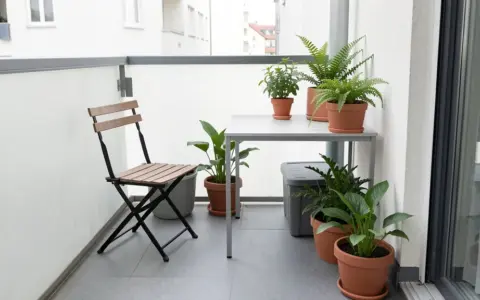
Keep leaves from touching cold glass or sitting in hot airflow unless species guidance indicates those conditions are suitable. Maintain access to windows, exits, HVAC equipment, and required building features. Shelves, ceiling hooks, stands, and wall mounts must be installed and loaded according to their hardware instructions and lease or building rules. A pot becomes much heavier after watering, so evaluate support for the wet weight, not the dry display.
Plants should not create a damp ring on a sill or block a room’s everyday function. Use stable saucers or cachepots that fit, then inspect beneath them. If a stand crowds the circulation path, revisit room layout principles from better lighting at home: a beautiful feature still needs safe clearance, usable light, and comfortable movement.
Make watering easier without automating judgment
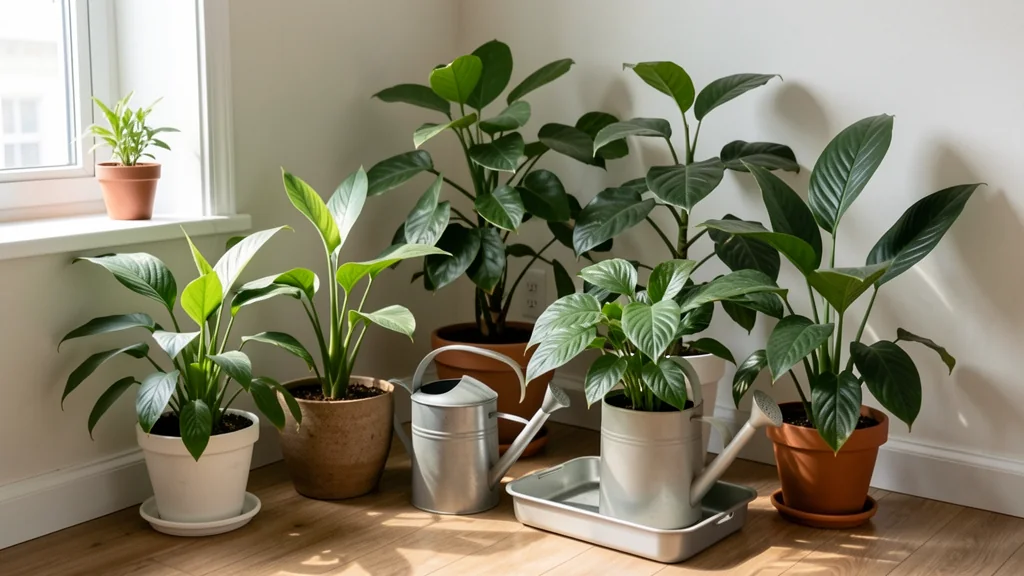
Store a clean watering vessel near the main plant group, but empty it between uses if standing water would attract pests or create a spill risk. A narrow spout helps direct water to soil instead of leaf crowns or furniture. Use room-temperature water if plant guidance recommends it, and consider local water characteristics only when there is a demonstrated plant need—not as a reason to adopt elaborate treatments for every pot.
Wicking systems, reservoirs, and timers can extend intervals, but they must match the plant, medium, and manufacturer’s directions. Test a new setup while you are present long enough to observe it. A reservoir can empty unexpectedly, remain too wet, clog, or leak. Automation should produce a visible status and a safe overflow path; it should not move the plant out of the inspection route.
During travel, simplify instructions for a helper. Group plants only if moving them will not create a harmful light change, mark which pots must not be watered without a dryness check, and demonstrate the amount or drainage process. Overwatering “just in case” can be as disruptive as a missed check. For a short absence, many established plants may need less intervention than expected, but use species-specific guidance.
Separate routine care from occasional projects
Repotting, fertilizing, propagation, pest treatment, and major pruning do not belong in every observation round. Schedule them only when plant condition, season, and reliable guidance support the work. This prevents a quick check from expanding into an unplanned mess. Keep potting materials contained on a washable mat, and clean up spilled medium before it is tracked through the home.
Use fertilizers and pest products only as their labels direct. More is not better, and combining products can harm plants or expose occupants. Confirm that a product is appropriate for the site, plant, pest, and household. Observe ventilation, protective-equipment, reentry, storage, and disposal instructions. Homemade mixtures are not automatically gentle; oils, soaps, alcohols, and kitchen ingredients can damage foliage or create exposure issues.
Repot on a stable work surface with a container that suits root mass and care requirements. A dramatically oversized pot can keep some mixes wet longer than expected. Drainage design, substrate, and container material work together, so changing all three at once requires close observation. For large or valuable specimens, get help rather than wrestling with a top-heavy plant alone.
Keep foliage and the care station clean
Dust can obscure leaf surfaces and make inspection harder, but cleaning technique depends on the species. Support a leaf gently and use a method recommended for that plant; avoid household polish, cooking oils, and improvised shine products. Fuzzy, fragile, spiny, waxy, or very small leaves may need a different approach from broad smooth foliage. Remove fallen material from soil and shelves without disturbing healthy roots.
Wipe saucers, stands, and nearby surfaces using products compatible with those materials, keeping cleaner out of pots. Check the underside of cachepots for condensation and protect wood or porous finishes from prolonged moisture. Wash plant-care tools separately from food-preparation equipment. If you reuse nursery pots, clean them through an appropriate horticultural method and let them dry before storage rather than stacking them with wet soil trapped inside.
A tidy station is easier to monitor for gnats, scale-like bumps, webbing, leaks, and fallen leaves. It also makes additions noticeable. Resist filling every open inch with another pot; inspection space is part of the system’s capacity. When foliage overlaps so densely that inner leaves and soil cannot be seen, divide the group or choose which plants the location can support well.
Adjust the loop when the home changes
Plant demand can shift as days shorten, heating begins, air conditioning changes, or a tree outside fills in. Do not preserve a summer watering interval by habit. Recheck soil and growth, watch for cold or hot drafts, and move plants gradually if their current light becomes unsuitable. After any move, give the plant time and avoid layering several other interventions onto relocation stress.
A change-of-season review can happen alongside seasonal home preparation. Clean safe, reachable window surfaces, inspect saucers, confirm shelves remain stable, and update the plant records. Quarantine and inspect new plants away from the main group when practical, because one impulsive addition can change the care needs of an otherwise steady station.
Common indoor plant care mistakes
- Watering every pot on schedule. Shared inspection timing does not mean shared moisture demand.
- Diagnosing from one leaf. A single symptom rarely identifies one certain cause.
- Changing everything together. New soil, location, fertilizer, and watering obscure which change mattered.
- Choosing inaccessible display spots. Difficult reach reduces inspection quality and increases lifting or spill risk.
- Leaving runoff in cachepots. Hidden standing water can affect roots, furniture, and pest conditions.
- Treating before identifying. Random pest products may miss the issue and create unnecessary exposure.
- Forgetting wet weight. Shelves and hooks must safely support a saturated pot and all hardware loads.
Frequently asked questions
How often should I check indoor plants?
Pick a repeatable observation interval, then adjust it to plant type, season, and home conditions. Checking does not require watering. New, recently moved, very small, or stressed plants may deserve closer observation than stable established specimens.
Can all my plants share one care station?
They can share a location only when its light, temperature, humidity, and space are acceptable for each species. They may still need separate watering decisions. Leave enough room to inspect foliage and prevent pots from becoming an inaccessible mass.
Should I mist leaves?
Misting is not a universal requirement and may be unhelpful for some plants or home conditions. Follow species guidance and consider whether foliage dries appropriately, surfaces are protected, and the practice actually addresses the need you identified.
What is the easiest way to remember plant care?
Keep plants on a visible route, use a concise record, and attach inspection to an existing household cue. Record meaningful changes rather than every glance. The aim is to notice conditions early, not to maintain a perfect log.
Final takeaway
Low maintenance comes from fewer assumptions, not less attention. Identify each plant, arrange safe and reachable stations, inspect the same signals in a repeatable loop, and water only after confirming an individual need. Keep occasional projects separate, adjust for seasonal changes, and defer to labels and qualified guidance when treatments or toxicity are involved. A small, observable collection is easier to care for well than a larger display built around wishful schedules.