

Small bathroom organization succeeds when every stored item supports an action that actually happens in the room. The challenge is not simply fitting more into cabinets. It is keeping daily essentials easy to reach, wet items able to dry, backups visible, and cleaning access clear in a room with limited surfaces.
You can improve the space without a renovation by mapping routines, reducing competing uses, and assigning shallow, specific zones. The most effective layout is often modest: fewer items beside the sink, one dependable home for each routine, and no container that must be fully unpacked to reach what is behind it.
Map what must happen in the room
List the actions performed in the bathroom, not the products stored there. A household may need morning dental care, evening skin care, hair styling, bathing, medication handling, toilet supplies, and surface cleaning. Different users may share some actions and keep others separate. This routine map creates useful groups.
Then identify what does not need to live in the bathroom. Bulk refills, travel supplies, rarely used tools, extra towels, and unopened products may fit better in a linen closet or another appropriate dry location. Follow every product’s storage directions; humidity, temperature, child access, and other conditions may make the bathroom unsuitable.
Keep only the amount that supports the room’s normal rhythm. Prime storage should not become a warehouse. When a daily item is hidden behind four backup bottles, the room has a stock problem rather than a shortage of organizers.
Measure the usable space, not the advertised space
Open every door and drawer while measuring. Record internal width, depth, and height, then note plumbing, hinges, drawer tracks, outlets, vents, and shutoff access. A bin that fits the cabinet’s outer dimensions may collide with a pipe or prevent a door from closing.
Observe reach. The center of a medicine cabinet may be effortless for one adult and inaccessible for another household member. Low cabinets may be reachable by children or pets, so placement must account for the product label, intended user, and household conditions. Keep electrical devices and cords positioned according to manufacturer instructions and away from water as directed.
Do not cover ventilation openings, service panels, or controls. If you rent, review the lease and building rules before drilling, attaching hardware, or altering fixtures. Freestanding and removable solutions can often establish the layout without permanent changes.
Divide storage by frequency and routine
Give daily actions the easiest locations. A small tray or shallow drawer section can hold the items used at the sink each morning. A separate caddy can hold a less frequent routine. The boundary prevents one group from spreading across every surface.
Use broad, recognizable labels such as “dental,” “hair,” “evening,” or a person’s name. Avoid categories so narrow that one new item breaks the system. If the same item serves two routines, choose the location where it is most often used rather than buying a duplicate automatically.
| Storage area | Best use | What to avoid |
|---|---|---|
| Open sink-side space | A very small set of daily, dry-use items | Backups, loose paper, crowded decorations |
| Easy-reach drawer | Shallow routine groups and small tools | Uncontained items stacked several layers deep |
| Medicine cabinet | Products suitable for the location and user access | Anything stored contrary to its label |
| Under-sink cabinet | Items compatible with plumbing, moisture risk, and safe access | Overpacked bins blocking pipes or shutoffs |
| Wall or over-door area | Lightweight items on properly installed supports | Loads or hardware not approved for the surface |
| Outside the bathroom | Bulk refills and infrequent supplies suited to that location | Items needed urgently during a routine |
The table is a decision guide, not a universal placement chart. Product labels, manuals, plumbing access, electrical safety, and your household’s needs come first.
Clear the sink without making routines harder
The sink area should leave room for handwashing, routine use, and wiping the surface. Start by removing everything, clean the area with a method suitable for its material, and return only items used there frequently. A narrow tray can define the limit and catch minor drips, provided it is easy to lift and clean.
Items that are wet after use need a way to drain or dry. Do not pack damp tools into a closed decorative container merely to hide them. Choose holders intended for the item and clean them as product guidance recommends. Keep cords from crossing the basin or creating a tangle on the floor.
Use a reset cue, not constant perfection
Attach a short reset to an existing action, such as after the final evening routine. Return items to their tray, hang textiles, and leave the basin clear. The reset should take less effort than searching tomorrow. If it regularly requires moving many objects, reduce what lives at the sink.
Make drawers shallow in practice
Deep drawers often become layers of small products. Use low dividers or several open trays so each group can be lifted independently. Place frequently used items in front and occasional items behind, while keeping labels and instructions visible. Do not stack loose containers so high that opening the drawer knocks them over.
Assign each section a capacity. When the hair-tool section is full, adding another tool requires a decision rather than expansion into dental supplies. A capacity boundary makes maintenance automatic and exposes duplicates.
For shared drawers, divide by person only when routines and products are truly personal. Shared basics can occupy a central section. A hybrid layout prevents four partially used versions of the same communal item while preserving clear ownership where it matters.
Use vertical space selectively
Wall-mounted shelves, over-door storage, hooks, and magnetic systems can help, but vertical space is not free space. Every addition affects sightlines, cleaning, door movement, and the feeling of crowding. Begin with the lightest frequently used items and install products only on surfaces and with hardware approved by their manufacturers.
Keep anything mounted above a toilet or sink secure and easy to retrieve without a risky stretch. Avoid storing heavy, breakable, or spill-prone items overhead. In a rental, use permitted methods and test whether removable products are suitable for the surface and humidity.
Choose hooks based on the drying job
A hook is useful when the textile can hang open enough to dry in the room’s conditions. Crowding several damp towels onto one small hook may save wall area while slowing drying. A bar, spaced hooks, or an out-of-room drying location may serve better. Ventilation and household routines should determine the choice.
Keep wet and dry zones distinct
The bathing area generates water and humidity; paper goods, extra textiles, and many personal products benefit from a drier location. Keep toilet paper and clean towels protected from routine splashes. Store shower products in a holder that drains and that can be removed for cleaning rather than lining every ledge.
Use the bathroom’s ventilation as designed and address recurring moisture instead of hiding it behind storage. The U.S. Environmental Protection Agency recommends controlling moisture and drying wet areas promptly as part of mold prevention. Its guide to mold, moisture, and your home provides institutional guidance. Persistent leaks, damage, or suspected mold may require the property owner or a qualified professional rather than another organizer.
Do not place a storage tower where it blocks air movement, a door, or access to a leak-prone area. Empty space around plumbing can make early signs of water easier to notice.
Approach under-sink storage as a service area
The cabinet under a bathroom sink contains plumbing first and storage second. Leave pipes, valves, and the cabinet floor visible enough to inspect. Use one or two removable bins rather than building a tight puzzle around the trap. A washable liner may make minor drips easier to spot, but it does not repair a leak.
Store only products appropriate for the location and accessible users. Follow labels for child-resistant storage, separation, ventilation, and temperature. Never decant household products into food or drink containers. If the cabinet has signs of dampness, investigate the source and move affected stored items as appropriate.
A handled caddy can hold compatible cleaning products used in the room and be removed as a unit. Keep it distinct from grooming products. For more detail on sinks used as mixed utility storage, see this guide to organizing under a kitchen sink safely; adapt the general access principles to your bathroom and product labels.
Control backups with a one-in-use system
Separate opened products from sealed backups. Keep one active product in its routine zone and put appropriate refills together in a less convenient but visible location. This makes it easier to know whether a replacement exists and prevents several bottles from being opened.
Give backup storage a fixed limit. The limit might be one narrow bin or one shelf section, depending on the household. It should be based on available space and normal use, not a universal number. When the area is full, review before adding more.
Check the backup zone before replacing an item, and move a refill into active storage only when needed. If you no longer use a product, follow local and product-specific guidance for an appropriate exit rather than leaving it to occupy prime space.
Make towels and laundry part of the plan
Decide where used washcloths, hand towels, and clothing go immediately. A small hamper must still allow suitable handling of damp textiles and have a route to the laundry process. If no hamper fits without blocking movement, use a collection point outside the bathroom.
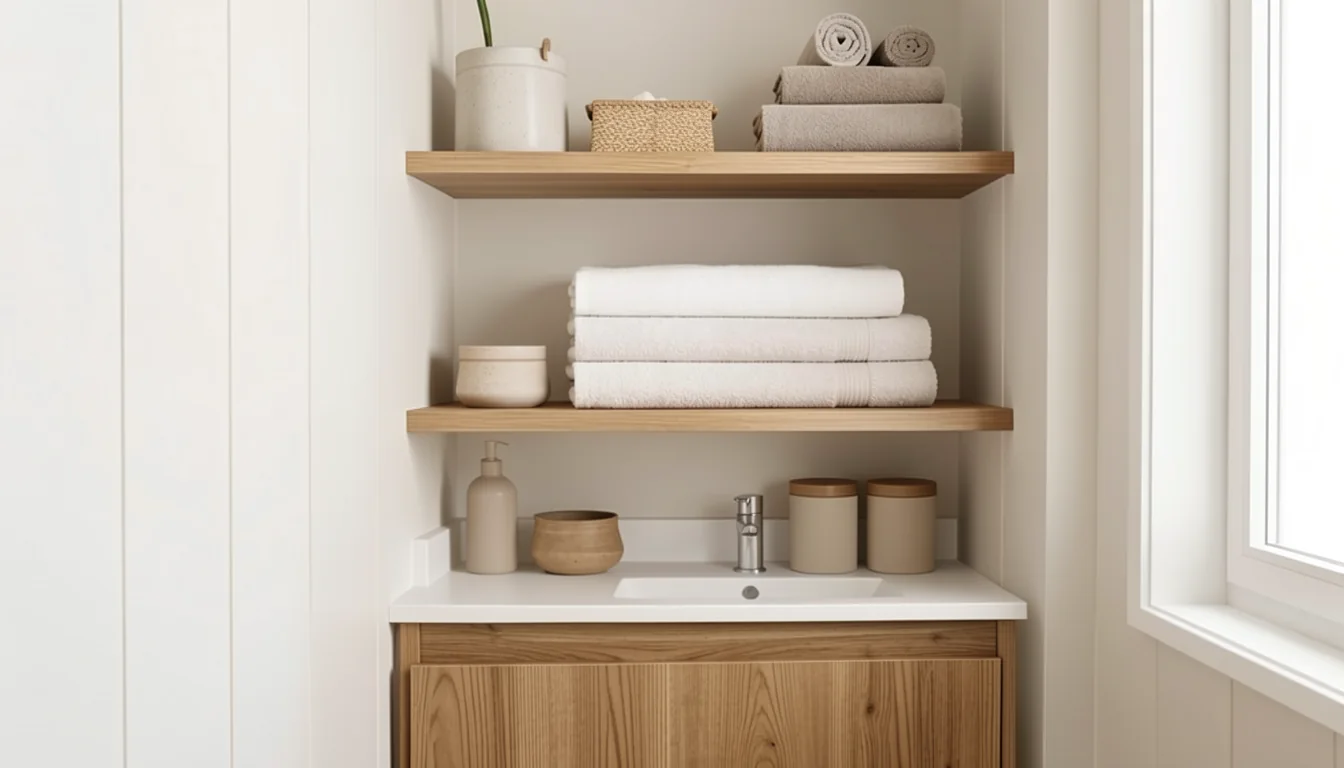
Keep only the clean towels the room can hold without crushing them into a damp-prone corner. Extra sets may belong with household linens. Folding should fit the shelf and make removal easy; no special technique is required. The destination matters more than decorative uniformity.
Hooks and bars should correspond to the number of textiles normally drying, not simply the number that can be squeezed onto the wall. When towels routinely remain damp or smell unusual, review drying conditions, laundering instructions, ventilation, and possible moisture issues rather than masking the odor.
Keep cleaning access easy
An organized bathroom should be simpler to clean. Leave floor edges open where possible, use trays that lift in one motion, and avoid intricate containers that require detailed scrubbing. Choose organizer materials that tolerate the location and follow their care instructions.
Build a short surface reset around high-use points: put products away, remove visible debris, and use an appropriate cleaning method when needed. Cleaning products vary, so read their labels, do not invent mixtures, and use the ventilation or protective measures they specify. A broader guide to cleaning high-touch areas without surface damage can help with handles, switches, and other frequently used points.
Keep tools close only if they can be stored appropriately. A toilet brush needs a stable, cleanable holder; cloths need a defined route after use. “Close” should never mean unsecured or mixed with personal-care items.
Common small-bathroom organization mistakes
Filling every vertical gap
More shelves can reduce usable space by making the room harder to clean and visually crowded. Add storage only for a named routine or item group, and preserve access to fixtures and ventilation.
Using deep opaque bins for daily items
A deep bin turns each routine into a search. Choose shallow, open containment for frequent items and reserve deeper containers for a single well-defined group that can be lifted out.
Storing all refills beside active products
Backups consume the best reach and obscure what is already open. Separate them and set a firm boundary.
Ignoring moisture
Closed baskets can conceal damp textiles, leaks, or residue. Favor visibility and drying where needed, and address the moisture source rather than reorganizing around it.
Installing before measuring movement
An organizer may fit the wall but block a door, shoulder space, or cabinet swing. Test the footprint with removable tape or cardboard and move through the routine before installation.
Creating a system only one person understands
Complicated categories collapse in a shared bathroom. Use routine names, simple boundaries, and a layout that intended users can reach and reset.
Test the layout for one ordinary week
Live with provisional trays, boxes, and removable labels before choosing permanent organizers. Notice what returns to the counter, which drawer jams, where towels land, and which supplies nobody can find. Those behaviors are design feedback.
Change the smallest thing that addresses the pattern. Move the dental tray, reduce backup stock, add one suitable hook, or relocate the hamper. Avoid changing all zones at once; a stable test shows whether the adjustment worked.
Review the room when household members, mobility needs, routines, or products change. Small bathroom organization is not a finished display. It is an adjustable agreement about where actions happen and how the room returns to ready.
Frequently asked questions
How can I organize a bathroom with no drawers?
Use a small routine tray on a suitable surface, a measured freestanding unit, permitted wall storage, or a caddy stored outside the room. Prioritize daily items and relocate bulk refills. Keep fixtures, ventilation, and movement clear.
What should stay on a small bathroom counter?
Only items used there frequently and that can be stored appropriately in that environment. Give them one defined tray or holder, keep the basin usable, and provide a drying solution for wet items.
Can I store medicine in the bathroom?
Follow the medicine’s label and pharmacist or clinician guidance. Bathroom heat, humidity, and access conditions vary, so do not assume it is an appropriate location simply because a cabinet is called a medicine cabinet.
How do I keep shared products from spreading everywhere?
Give shared basics one central zone with a capacity limit. Assign separate sections only for genuinely personal routines, and make each user responsible for returning their group.
What is the fastest way to make the room feel less cluttered?
Clear the sink and floor, remove backups from prime space, group the remaining daily items by routine, and leave one open area. Do not hide unresolved moisture or maintenance issues inside new containers.
Final takeaway
A small bathroom works best when storage follows routines and respects the room’s wet, shared, service-heavy nature. Protect the easiest reach for daily essentials, keep backups limited, allow textiles and tools to dry, and preserve access to plumbing, fixtures, and cleaning. When each action has a simple zone and a short reset, the room can stay functional without being packed.