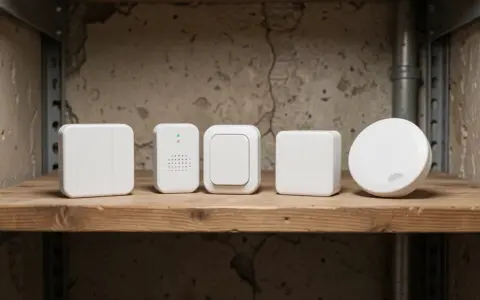



An indoor air quality monitor can make otherwise invisible changes easier to notice. It may show a rise in particles during cooking, a carbon dioxide pattern in a crowded room, or shifting humidity across a season. Its greatest value is not a single colored badge or an all-purpose “air score.” It is the ability to connect repeated measurements with activities, ventilation, filtration, moisture, and time.
A consumer monitor does not diagnose illness, identify every contaminant, certify that a home is safe, or replace a building inspection, laboratory test, code-required alarm, or qualified professional. People with symptoms or health concerns should seek advice from a licensed health care professional; urgent symptoms require appropriate emergency help. For building, combustion, moisture, mold, ventilation, or hazardous-material concerns, follow official guidance and consult the relevant qualified professional. This guide is about choosing and using a general household trend tool within those boundaries.
Define the question before choosing a monitor
Begin with a plain-language question. Are bedrooms becoming too humid overnight? Do particle readings rise when the range hood is off? Does a home office feel stuffy after the door stays closed? Are you trying to compare rooms before changing ventilation or filtration? A focused question helps you choose useful measurements and keeps a generic score from becoming the goal.
If there is already a serious concern—persistent combustion odors, visible moisture damage, a suspected gas leak, asbestos disturbance, lead dust, strong chemical exposure, or recurring symptoms—do not wait for a consumer monitor to settle it. Leave or isolate the area when official safety guidance calls for that, use emergency or utility contacts as appropriate, and obtain qualified assessment. The monitor may not measure the hazard, may respond to something else, or may show no change at all.
Understand what common measurements mean
Particulate matter channels commonly estimate airborne particles in size groupings such as PM2.5. Optical sensors infer concentration from how particles scatter light; composition, humidity, placement, and sensor design can affect the estimate. The number can help compare patterns in one location, but it does not reveal exactly what every particle is or establish the source by itself.
Carbon dioxide can be a useful indicator of occupancy and ventilation patterns when measured with an appropriate sensor. It is not a complete air-quality measure, and a normal-looking carbon dioxide reading does not rule out particles, carbon monoxide, radon, or chemicals. Some low-cost devices estimate carbon dioxide from other gases rather than measuring it directly, so check the specification and terminology instead of assuming every “CO2” field is equivalent.
Relative humidity and temperature add important context. Persistent high moisture can support building problems, while very dry conditions may affect comfort, but readings vary by room and season. Total volatile organic compound, or TVOC, sensors are often broad and cross-sensitive. They may detect a change after cleaning, painting, cooking, or using a fragranced product without identifying the chemical or its health significance. Treat the trend as a prompt to investigate context, not as a chemical analysis.
| Measurement | Useful question | Important limit |
|---|---|---|
| PM2.5 or particle estimate | When and where do fine-particle readings rise? | Does not identify particle composition or diagnose an exposure |
| Carbon dioxide | How do occupancy and ventilation patterns change a room? | Does not represent every pollutant or replace carbon monoxide alarms |
| Relative humidity | Is a room repeatedly damp or dry over time? | One location may not represent walls, cavities, or other rooms |
| TVOC estimate | Do broad gas-sensor readings change after an activity? | Usually cannot identify a compound, source, or health effect |
| Temperature | Could heat or cooling explain comfort and sensor changes? | Comfort varies, and temperature alone does not describe air quality |
Keep life-safety devices separate
An air quality monitor is not a substitute for listed smoke alarms or carbon monoxide alarms required for the home. Unless a device is explicitly approved and installed for a life-safety function under applicable rules, consider its extra channel informational only. Never silence, remove, relocate, or delay responding to a dedicated alarm because a general monitor looks normal.
Radon also requires the appropriate test method and official guidance; a generic particle or TVOC sensor cannot infer it. The same principle applies to specific gases and hazardous materials. Use the EPA’s indoor air quality overview as a starting point, then defer to pollutant-specific government guidance, device instructions, local requirements, and qualified professionals when the question exceeds the monitor’s stated capabilities.
Compare specifications that affect usefulness
Look for the exact sensor type, measured range, resolution, stated accuracy, operating temperature and humidity, warm-up time, calibration guidance, and expected sensor life. A precise-looking display is not evidence of accuracy. Check whether the manufacturer describes limitations and replacement support. If specifications say only that the device offers an overall score, it may be difficult to understand what changed or compare results responsibly.
Review privacy, accounts, and connectivity
A cloud-connected monitor may collect readings, room names, occupancy-like patterns, device identifiers, network details, and account information. Read the privacy controls before assigning revealing room labels. Prefer data minimization, restrict location and microphone permissions unless genuinely needed, use a unique password and multifactor authentication when offered, and remove unused household members or integrations. Install updates and follow vendor notices about support.
If practical, place connected sensors on a separate guest or IoT network that still allows required functions. Decide what remains available when the internet, cloud service, or app fails. Local display and export can reduce dependence, but confirm them in documentation. A household planning method like a shared chore system can assign one person to monthly data review and another to device maintenance without giving everyone administrator access.
Choose a representative starting location
Follow the manual’s placement height, clearance, power, and environmental requirements. For a general room baseline, avoid placing the monitor directly beside an open window, supply vent, return grille, air cleaner outlet, humidifier, stove, shower, candle, printer, exterior door, or direct sunlight. Those spots can overrepresent a local source or airflow. Keep it away from splashes, grease, condensation, children, pets, and unstable shelves.
Allow a baseline before changing everything
Set up the monitor according to its manual, including any warm-up or calibration period. Observe several ordinary days before making multiple interventions at once, unless readings accompany an obvious hazard that requires immediate action. Log cooking, cleaning, showers, open windows, outdoor smoke, unusual occupancy, and HVAC operation. The goal is to learn which changes repeat, not to stare at minute-to-minute motion.
Do not chase every spike. Opening an oven, spraying a cleaner, or moving the device can cause a temporary change. Check duration, recurrence, related channels, and activity. If the display uses colors, inspect the actual value and the manufacturer’s threshold logic. Different devices may categorize the same number differently, and a green badge is not a medical clearance.
Run one-variable household experiments
Once a pattern appears, change one low-risk factor at a time. Compare particle trends when cooking the same type of meal with and without correctly operating an externally vented range hood, if available and safe. Compare a bedroom with the door in its usual position and with a manufacturer-approved ventilation change. Compare bathroom humidity recovery before and after cleaning an existing exhaust grille as its manual permits. Keep weather and occupancy notes because they can alter the result.
A practical guide to everyday indoor air quality habits can supply low-complexity options such as source control, appropriate ventilation, housekeeping, and filtration. Do not create unsafe experiments, deliberately generate smoke or fumes, block required vents, mix cleaning products, or operate combustion equipment differently from its instructions. Ask a qualified HVAC or building professional before altering system controls, ductwork, exhaust, pressure relationships, or filtration beyond documented compatibility.
Respond to readings in the right order
First look for a known activity or visible condition. Stop avoidable sources when safe, move away from irritating products, and ventilate only when doing so is appropriate for the pollutant, weather, outdoor conditions, and building system. Outdoor smoke, extreme heat, or high humidity can make opening windows a poor response. Follow EPA and local public-health advice during outdoor air events rather than applying a universal rule.
Next, use source control and maintenance. Correct a moisture source, use exhaust as designed, keep combustion appliances professionally maintained, and replace HVAC filters only with a type and schedule approved for the system. Filtration does not solve every gas or moisture problem. If a pattern persists, affects multiple rooms, has no clear explanation, or coincides with building damage, seek qualified assessment rather than buying another sensor to confirm the first.
Handle odors and symptoms cautiously
Odor intensity does not equal toxicity, and lack of odor does not establish safety. A TVOC change cannot identify the substance behind a smell. If an odor is persistent, sudden, combustion-like, or associated with a spill or symptoms, use the relevant emergency, poison-control, utility, product, or professional guidance. For routine investigation, the structured observations in troubleshooting common household odors may help separate location, timing, and activities without making unsupported conclusions.
Likewise, a monitor cannot tell whether air caused a headache, cough, fatigue, or other symptom. Do not use its reading to diagnose, dismiss, or treat a health condition. Leave a suspected exposure when appropriate, seek licensed medical advice, and mention the location, timing, activities, and any known alarms or official measurements. A consumer chart can be context for a conversation, not a clinical result.
Maintain and verify the monitor
Dust, age, humidity, contamination, power interruptions, and sensor drift can change performance. Follow the manual for cleaning, calibration, firmware, battery care, resets, and replacement. Never vacuum, wipe, spray, or open a sensor unless the instructions permit it. Record maintenance and avoid placing cleaning chemicals near the intake. If a device reports an error or impossible values, remove it from decision-making until support or proper replacement resolves the issue.
Periodically compare the monitor with itself under consistent conditions, not with an expectation that two consumer units will match exactly. A sudden step change after relocation, update, or cleaning may be procedural. Government or professional-grade nearby data can provide context for outdoor trends but may not represent the indoor room. The EPA’s Air Sensor Guidebook provides a more detailed framework for planning, collecting, evaluating, and communicating sensor information.
Review the data without overclaiming
A weekly review is usually more useful than constant checking. Note recurring peaks, the time required to return toward baseline, differences between occupied and empty periods, and whether an intervention changed the same pattern more than once. Preserve raw units when possible rather than reporting only an index. Label observations as estimates from a specific device and location.
Avoid declaring that one room is “toxic,” that a product is safe, or that a device proved a medical cause. Consumer readings have uncertainty, and context can be incomplete. Share only the minimum household data needed with contractors or clinicians, explain the monitor model and placement, and distinguish observed facts from guesses. Responsible language prevents a useful trend tool from creating false reassurance or unnecessary alarm.
Frequently asked questions
Which measurements should a first monitor include?
Choose based on the question. Particles, carbon dioxide, temperature, and relative humidity can support many household investigations, but more channels are not automatically better. If you need information about radon, carbon monoxide, or another specific hazard, use the approved test or alarm and official guidance for that purpose rather than assuming a general monitor covers it.
Can one monitor cover the whole house?
No single placement represents every room, floor, source, and airflow condition. Start with one question in one room. After establishing a baseline, you can move the unit using a documented comparison period or add another if the decision justifies it. A quiet reading in the living room does not clear a basement, bedroom, attached garage, or concealed building cavity.
What does a high reading mean for my health?
It means the device estimated a value under its current conditions. It does not diagnose an exposure or predict an individual’s health outcome. Check the device limits and relevant EPA or local guidance, move away from an obvious source when appropriate, and consult a licensed health care professional about symptoms or personal risk. Use emergency services for urgent symptoms.
Should the monitor control a purifier automatically?
Automation can be convenient, but verify compatible devices, thresholds, failure behavior, noise, energy use, filter requirements, and what happens offline. Preserve manual control and notifications. An air cleaner must be appropriate for the target pollutant and room, and it does not replace source control, ventilation decisions, moisture correction, alarms, or professional assessment.
Use the monitor as a question tool
The best indoor air quality monitor is not necessarily the one with the most sensors or the brightest score. It is the device whose measurements, limitations, placement, privacy model, and records match a real household question. Used consistently, it can reveal timing and support measured changes. Used as a verdict, it can conceal uncertainty.
Define the question, document a representative location, build a baseline, and change one safe variable at a time. Defer to device manuals, EPA and local guidance, required alarms, licensed health care professionals, and qualified building professionals whenever the issue exceeds a consumer sensor’s role. That boundary is what makes the data useful rather than misleading.